EN
EN

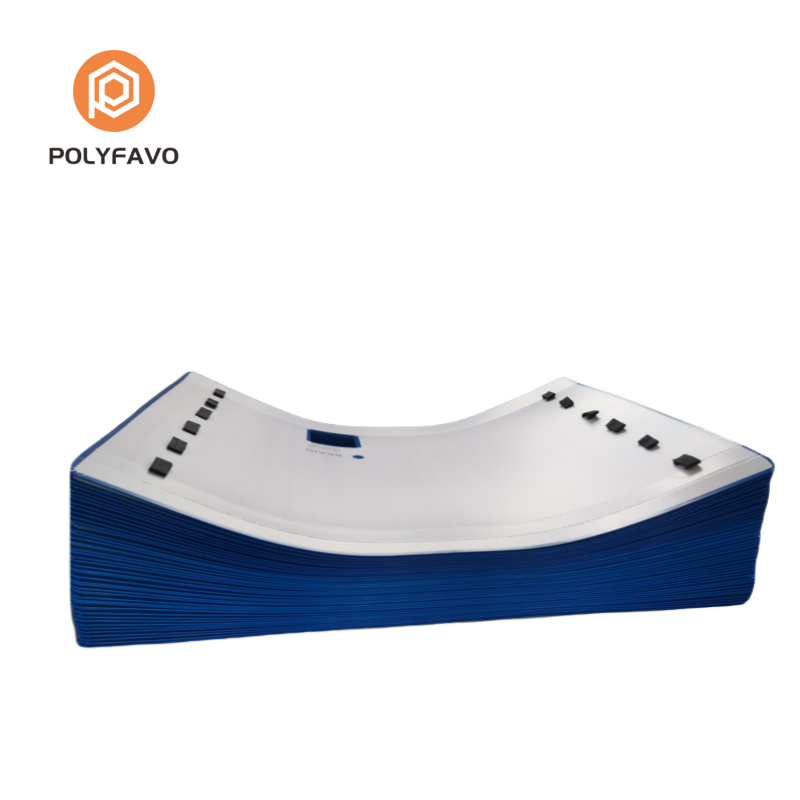
When selecting packaging and construction materials for industrial applications, the choice between plastic honeycomb panel options and traditional cardboard solutions represents a critical decision point. Modern manufacturing demands materials that deliver superior performance, cost-effectiveness, and environmental sustainability. The honeycomb panel structure, whether constructed from plastic polymers or cardboard fibers, offers unique advantages that have revolutionized multiple industries. Understanding the fundamental differences between these materials enables informed decision-making for applications ranging from automotive components to aerospace engineering and protective packaging systems.
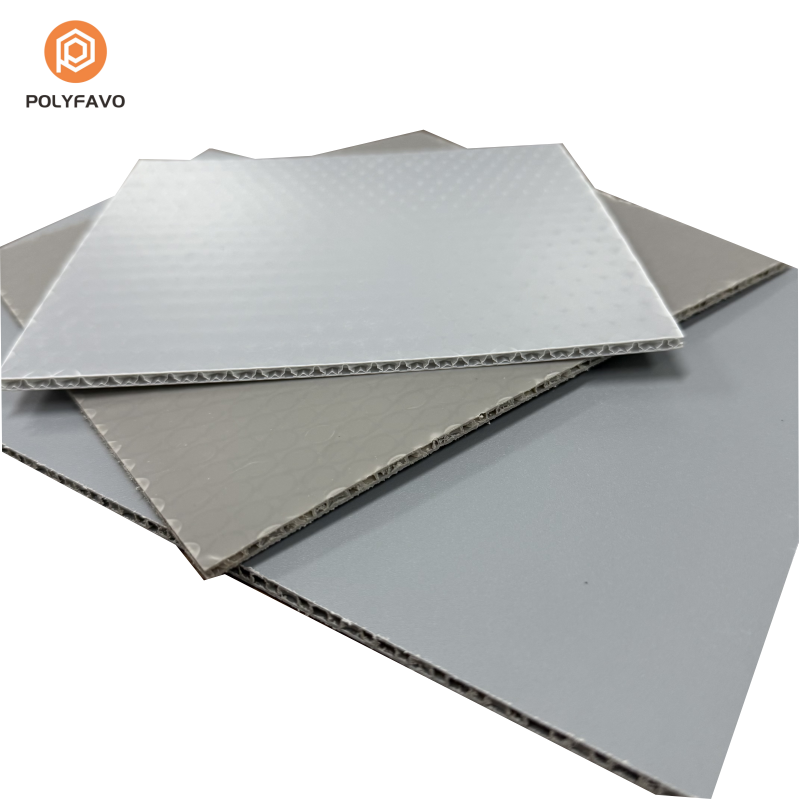
Material Composition and Manufacturing Process
Plastic Honeycomb Panel Construction
Plastic honeycomb panel manufacturing utilizes advanced polymer extrusion and thermoforming techniques to create lightweight yet robust structural materials. Polypropylene represents the most common base material, offering excellent chemical resistance and impact strength. The manufacturing process involves creating hexagonal cells through precise molding techniques that ensure uniform wall thickness and optimal strength-to-weight ratios. These panels typically feature smooth surfaces that resist moisture absorption and chemical degradation.
The production methodology for plastic variants incorporates recycled content without compromising structural integrity. Modern manufacturing facilities employ computer-controlled systems to maintain consistent cell dimensions and wall thickness throughout large production runs. This precision manufacturing approach results in honeycomb panel products with predictable mechanical properties and dimensional stability across varying temperature ranges.
Cardboard Honeycomb Panel Manufacturing
Cardboard honeycomb panel production relies on papermaking technologies combined with specialized adhesive systems to create corrugated structures. The process begins with kraft paper sheets that undergo perforation and expansion to form hexagonal cells. Multiple layers are then laminated using water-based adhesives to achieve desired thickness and strength characteristics. The resulting honeycomb panel exhibits excellent compressive strength while maintaining lightweight properties.
Quality control in cardboard manufacturing focuses on moisture content management and adhesive curing parameters. The cellular structure depends heavily on precise tension control during the expansion process, ensuring uniform cell formation throughout the panel thickness. Environmental considerations during production include managing volatile organic compound emissions and optimizing energy consumption during the drying phases.
Structural Performance and Mechanical Properties
Strength-to-Weight Ratio Analysis
The strength-to-weight performance of honeycomb panel materials varies significantly between plastic and cardboard compositions. Plastic variants typically demonstrate superior tensile strength and flexural modulus compared to cardboard alternatives. Laboratory testing reveals that polypropylene honeycomb panels maintain structural integrity under repeated loading cycles, exhibiting minimal creep deformation over extended periods. This mechanical stability makes plastic options ideal for applications requiring long-term dimensional stability.
Cardboard honeycomb panel materials excel in compressive strength applications while offering lower overall density. The cellular structure efficiently distributes loads across the panel surface, preventing localized failure modes common in solid materials. However, cardboard variants show increased susceptibility to fatigue failure under cyclic loading conditions, particularly in high-humidity environments where adhesive bonds may weaken over time.
Impact Resistance and Durability
Impact resistance testing demonstrates clear performance differences between material types. Plastic honeycomb panel constructions absorb impact energy through controlled deformation without catastrophic failure. The polymer matrix allows for elastic recovery after moderate impact events, maintaining structural integrity for continued service. Temperature variations have minimal effect on impact performance within typical operating ranges.
Cardboard alternatives provide adequate impact resistance for moderate loading conditions but may experience permanent deformation under severe impacts. The fiber-based structure tends to crush rather than elastically deform, limiting reusability after significant impact events. Moisture exposure significantly reduces impact resistance in cardboard materials, making environmental protection critical for outdoor applications.
Environmental Considerations and Sustainability
Recyclability and End-of-Life Management
Environmental sustainability increasingly influences material selection decisions in industrial applications. Plastic honeycomb panel products offer excellent recyclability when manufactured from thermoplastic polymers like polypropylene. The recycling process involves mechanical shredding and remelting to produce new polymer feedstock without significant property degradation. Clean separation of plastic components enables closed-loop recycling systems that minimize waste generation.
Cardboard honeycomb panel materials demonstrate superior biodegradability compared to plastic alternatives. The fiber-based composition decomposes naturally under composting conditions, returning organic matter to soil systems. However, adhesive components may require special handling during recycling processes. The paper recycling infrastructure readily accommodates cardboard panels, making disposal convenient in most geographic regions.
Carbon Footprint and Manufacturing Impact
Life cycle analysis reveals complex environmental trade-offs between material options. Plastic honeycomb panel production requires higher initial energy input due to polymer processing temperatures and chemical feedstock requirements. However, the extended service life and reusability of plastic panels often offset initial environmental costs over multiple use cycles. Transportation efficiency improves with plastic panels due to consistent dimensional stability and moisture resistance.
Cardboard manufacturing benefits from renewable fiber sources and lower processing temperatures, resulting in reduced immediate carbon emissions. The shorter service life typically associated with cardboard applications may require more frequent replacement, potentially increasing long-term environmental impact. Water consumption during papermaking processes represents a significant environmental consideration in regions with water scarcity concerns.
Cost Analysis and Economic Factors
Initial Investment and Purchase Costs
Economic evaluation of honeycomb panel options requires comprehensive analysis beyond simple material costs. Initial purchase prices generally favor cardboard alternatives, particularly for single-use applications where reusability provides no economic advantage. The manufacturing scale economics of cardboard production result in competitive pricing for standard thickness and density specifications. Custom sizes and specialized treatments may increase cardboard costs significantly.
Plastic honeycomb panel materials command higher initial prices due to polymer raw material costs and specialized manufacturing equipment requirements. However, the durability advantage of plastic panels often justifies premium pricing through extended service life and reduced replacement frequency. Volume purchasing agreements can significantly reduce per-unit costs for large-scale applications requiring consistent material specifications.
Total Cost of Ownership
Long-term economic analysis reveals different cost structures for each material type. Plastic honeycomb panel solutions demonstrate lower total ownership costs in reusable applications due to multiple use cycles and minimal maintenance requirements. The moisture resistance and chemical stability of plastic panels eliminate replacement costs associated with environmental degradation. Reduced handling damage during transportation and storage further contributes to cost savings.
Single-use applications may favor cardboard alternatives where disposal costs are minimal and storage space is not constrained. The lighter weight of cardboard panels reduces shipping costs for long-distance transportation. However, potential damage during handling and storage may increase total costs through material waste and replacement requirements. Insurance considerations may also influence total cost calculations for high-value cargo protection applications.
Application-Specific Performance Requirements
Packaging and Protection Applications
Protective packaging applications demand materials that safeguard valuable contents during transportation and storage. Plastic honeycomb panel constructions excel in applications requiring moisture barrier properties and chemical resistance. Electronics packaging benefits from the anti-static properties available in specially formulated plastic panels. The smooth surface finish of plastic panels facilitates easy cleaning and contamination removal in pharmaceutical and food packaging applications.
Cardboard honeycomb panel options provide excellent cushioning properties for fragile items through controlled compression characteristics. The natural fiber composition offers superior printability for branding and identification purposes. However, moisture sensitivity limits cardboard applications in humid environments or where liquid exposure might occur. The biodegradable nature of cardboard makes it suitable for single-use packaging where environmental impact is a primary concern.
Construction and Architectural Uses
Architectural applications of honeycomb panel materials require consideration of building codes, fire safety requirements, and long-term weathering performance. Plastic panels offer superior weather resistance and dimensional stability for exterior applications. UV-stabilized formulations prevent degradation under prolonged sunlight exposure. The lightweight nature of honeycomb panels reduces structural loading requirements compared to solid materials of equivalent thickness.
Interior construction applications may favor cardboard alternatives where fire safety regulations permit their use. The natural fiber composition provides favorable acoustical properties for sound absorption applications. Cardboard panels accept various finishing materials and treatments for aesthetic enhancement. However, moisture control becomes critical in building applications to prevent mold growth and structural degradation over time.
FAQ
What are the main advantages of plastic honeycomb panels over cardboard alternatives
Plastic honeycomb panel materials offer superior moisture resistance, chemical stability, and reusability compared to cardboard alternatives. The thermoplastic construction allows for multiple use cycles without significant property degradation, making plastic panels more cost-effective for long-term applications. Additionally, plastic panels maintain dimensional stability across wider temperature ranges and resist impact damage better than cardboard options.
How do environmental factors affect the performance of different honeycomb panel types
Environmental conditions significantly influence honeycomb panel performance characteristics. Plastic panels maintain consistent properties across varying humidity and temperature conditions, while cardboard panels may experience strength reduction and dimensional changes in high-moisture environments. UV exposure affects both materials differently, with plastic panels requiring stabilization additives and cardboard panels showing natural resistance to UV degradation but potential fiber weakening over time.
Which honeycomb panel type provides better value for packaging applications
The optimal honeycomb panel choice for packaging depends on specific application requirements and usage patterns. Single-use packaging applications often favor cardboard due to lower initial costs and biodegradability advantages. Reusable packaging systems typically benefit from plastic panels through reduced replacement costs and superior durability. High-value or moisture-sensitive products generally require plastic panel protection regardless of cost considerations.
Can honeycomb panels be customized for specific industrial requirements
Both plastic and cardboard honeycomb panel options offer extensive customization possibilities to meet specific industrial requirements. Plastic panels can be formulated with various additives for enhanced properties such as flame resistance, anti-static characteristics, or increased impact strength. Cardboard panels accept different adhesive systems, surface treatments, and laminated facing materials. Custom cell sizes, panel thicknesses, and edge finishing options are available for both material types to optimize performance for intended applications.
Table of Contents
- Material Composition and Manufacturing Process
- Structural Performance and Mechanical Properties
- Environmental Considerations and Sustainability
- Cost Analysis and Economic Factors
- Application-Specific Performance Requirements
-
FAQ
- What are the main advantages of plastic honeycomb panels over cardboard alternatives
- How do environmental factors affect the performance of different honeycomb panel types
- Which honeycomb panel type provides better value for packaging applications
- Can honeycomb panels be customized for specific industrial requirements