EN
EN

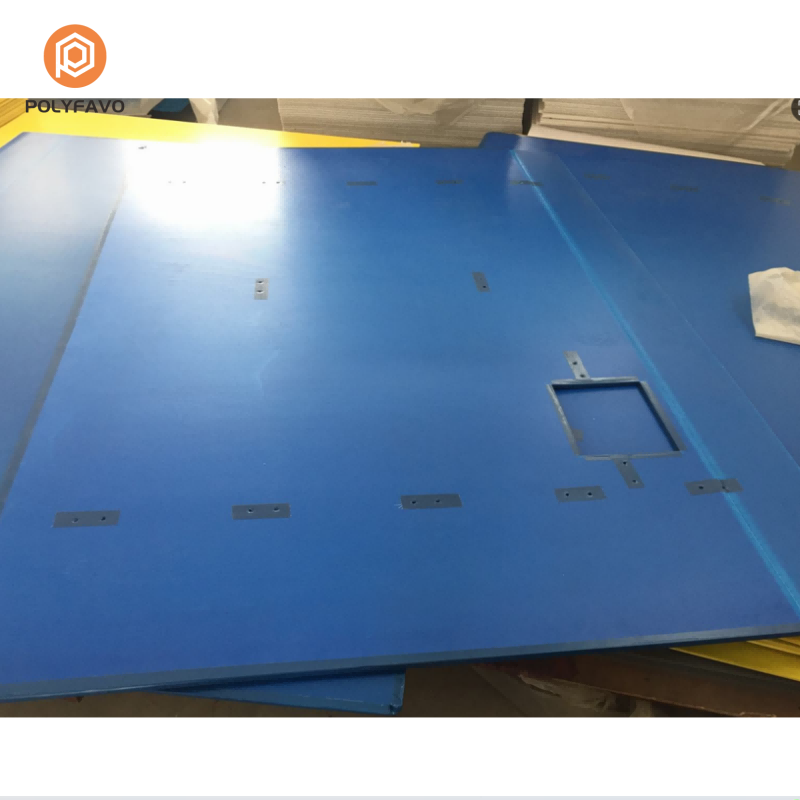
Selecting the appropriate honeycomb board for industrial and commercial applications requires understanding the unique properties and specifications that differentiate various types of cellular panels. Modern manufacturing processes have revolutionized how businesses approach material selection, with polypropylene honeycomb boards emerging as a preferred solution across multiple industries. These lightweight yet durable panels offer exceptional strength-to-weight ratios, making them ideal for packaging, construction, and automotive applications. Understanding the key factors that influence honeycomb board performance will enable you to make informed decisions that optimize both functionality and cost-effectiveness.
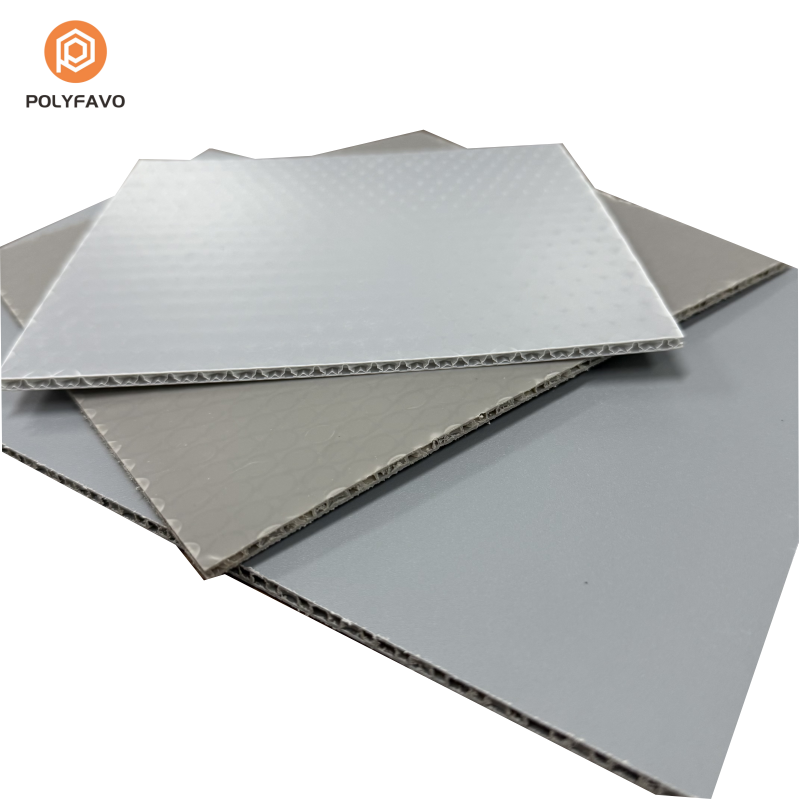
Understanding Honeycomb Board Construction and Materials
Polypropylene Core Technology
The foundation of any quality honeycomb board lies in its core construction and material composition. Polypropylene honeycomb boards feature a cellular core structure that mimics natural honeycomb patterns, creating exceptional rigidity while maintaining minimal weight. This innovative design distributes loads evenly across the panel surface, preventing localized stress concentrations that could lead to failure. The thermoplastic nature of polypropylene provides excellent chemical resistance, making these panels suitable for harsh industrial environments where exposure to acids, alkalis, and solvents is common.
Manufacturing quality directly impacts the long-term performance of honeycomb board applications. Premium manufacturers employ precise extrusion processes that ensure consistent cell wall thickness and uniform core density throughout each panel. These controlled manufacturing parameters result in predictable mechanical properties and reliable performance characteristics. The cellular structure also provides excellent thermal insulation properties, making honeycomb boards valuable for applications requiring temperature control or energy efficiency considerations.
Surface Treatment Options
Surface treatments significantly influence the functionality and appearance of honeycomb board products. Textured surfaces provide enhanced grip and non-slip properties, making them ideal for flooring applications or work platforms where safety is paramount. Smooth surfaces offer easier cleaning and maintenance, which is essential in food processing, pharmaceutical, or cleanroom environments. The choice between different surface treatments should align with specific application requirements and maintenance protocols.
Corona treatment and flame treatment options enhance adhesion properties for applications requiring secondary bonding or printing processes. These surface modifications create microscopic changes that improve ink adhesion, paint compatibility, and lamination strength. Understanding these treatment options enables better integration of honeycomb boards into complex manufacturing processes or custom fabrication projects.
Physical Properties and Performance Characteristics
Strength and Load-Bearing Capacity
Evaluating the structural performance of honeycomb board requires understanding multiple strength parameters including compressive strength, flexural strength, and impact resistance. The cellular core design provides exceptional compressive strength perpendicular to the panel surface, making these materials excellent for applications involving vertical loads or stacking requirements. Flexural strength determines the panel's ability to resist bending forces, which is crucial for spanning applications or when panels must support distributed loads.
Impact resistance characteristics vary significantly based on core density and face sheet thickness. Higher density cores provide better impact absorption but increase overall panel weight. The optimal balance between impact resistance and weight depends on specific application requirements. For packaging applications, higher impact resistance may justify increased weight, while architectural applications might prioritize weight reduction over maximum impact performance.
Environmental Durability Factors
Environmental resistance properties determine the long-term viability of honeycomb board installations in challenging conditions. UV resistance becomes critical for outdoor applications or installations with significant sun exposure. Quality polypropylene honeycomb boards incorporate UV stabilizers that prevent degradation and maintain structural integrity over extended exposure periods. Temperature stability affects both mechanical properties and dimensional stability across varying environmental conditions.
Moisture resistance and chemical compatibility ensure reliable performance in humid or chemically aggressive environments. Unlike traditional materials such as cardboard or wood-based panels, polypropylene honeycomb boards resist moisture absorption and dimensional changes caused by humidity fluctuations. This stability makes them particularly valuable for marine applications, outdoor signage, or industrial environments with high humidity levels.
Application-Specific Selection Criteria
Packaging and Protection Applications
Packaging applications require honeycomb board materials that balance protection capabilities with cost-effectiveness and sustainability. The cellular structure provides excellent cushioning properties that protect sensitive products during shipping and handling. Customizable thickness options allow packaging engineers to optimize protection levels while minimizing material usage and shipping costs. Reusable packaging solutions benefit from the durability and cleanability of polypropylene honeycomb boards.
Electronic component packaging demands anti-static properties and precise dimensional tolerances. Specialized conductive grades of honeycomb board provide electrostatic discharge protection while maintaining the lightweight benefits of cellular construction. Food packaging applications require FDA-compliant materials with smooth, easy-to-clean surfaces that resist bacterial growth and contamination. These specialized requirements influence material selection and surface treatment choices.
Construction and Architectural Uses
Construction applications for honeycomb board materials focus on lightweight structural elements, temporary structures, and specialized cladding systems. The high strength-to-weight ratio makes these panels valuable for applications where structural loads must be minimized without compromising performance. Temporary construction applications benefit from the reusability and weather resistance of polypropylene materials.
Architectural cladding applications require consideration of thermal expansion, wind load resistance, and aesthetic requirements. Honeycomb boards can be fabricated with various colors and textures to meet design specifications while providing functional benefits such as thermal insulation and weather protection. Fire resistance ratings become critical for many construction applications, requiring careful evaluation of material certifications and compliance with local building codes.
Thickness and Density Considerations
Thickness Selection Guidelines
Panel thickness directly influences both structural performance and material costs, requiring careful balance between requirements and budget constraints. Thinner honeycomb boards excel in applications where weight reduction is paramount, such as aerospace components or portable displays. These lightweight options maintain surprising strength characteristics while enabling easy handling and installation. Medium thickness panels provide versatile performance suitable for general industrial applications, packaging, and moderate structural requirements.
Thicker honeycomb board options deliver maximum structural performance for demanding applications such as flooring systems, heavy-duty packaging, or structural components. The increased core depth provides enhanced bending strength and compression resistance, justifying the additional material cost in critical applications. Understanding load requirements and safety factors helps determine the minimum thickness needed for reliable long-term performance.
Density Optimization
Core density affects multiple performance characteristics including strength, weight, thermal properties, and cost. Higher density cores provide increased strength and impact resistance but result in heavier panels with higher material costs. The cellular structure efficiency decreases at very high densities, potentially making solid materials more cost-effective for certain applications. Lower density options maximize weight savings while maintaining adequate performance for less demanding applications.
Optimal density selection requires understanding the relationship between performance requirements and cost constraints. Many honeycomb board applications can achieve excellent performance with medium-density cores that balance strength, weight, and cost considerations. Custom density options may be available for specialized applications requiring specific performance characteristics that standard products cannot achieve.
Quality Assessment and Testing Standards
Industry Standards and Certifications
Quality honeycomb board products comply with relevant industry standards that ensure consistent performance and reliability. ASTM International standards provide testing methodologies for evaluating mechanical properties, environmental resistance, and dimensional stability. ISO standards establish international benchmarks for material quality and performance characteristics. These standardized testing procedures enable accurate comparison between different honeycomb board products and suppliers.
Industry-specific certifications may be required for certain applications, such as food contact approval for packaging applications or fire resistance ratings for construction uses. Understanding applicable standards and certification requirements early in the selection process prevents costly redesigns or material substitutions later in project development. Reputable manufacturers provide comprehensive testing data and certification documentation to support material selection decisions.
Performance Validation Methods
Prototype testing and validation ensure honeycomb board materials will perform adequately in real-world applications. Compression testing evaluates load-bearing capacity under various loading conditions and environmental factors. Flexural testing determines bending strength and stiffness characteristics important for spanning applications. Impact testing assesses the material's ability to absorb energy and resist damage from dropping or striking forces.
Environmental testing validates long-term performance under expected service conditions. Accelerated aging tests simulate years of environmental exposure in controlled laboratory conditions. Temperature cycling evaluates dimensional stability and mechanical property retention across expected operating temperature ranges. These validation methods provide confidence in material selection decisions and help establish appropriate safety factors for critical applications.
Cost Analysis and Value Engineering
Initial Cost Considerations
Material costs represent only one component of the total cost equation for honeycomb board applications. Initial purchase prices vary significantly based on thickness, density, surface treatments, and order quantities. Volume pricing benefits make honeycomb boards more cost-effective for large-scale applications or when multiple projects can share material purchases. Custom sizing and fabrication services add costs but may eliminate waste and reduce labor requirements.
Comparing honeycomb board costs against alternative materials requires consideration of performance characteristics and processing requirements. While initial costs may exceed traditional materials in some cases, the performance benefits and processing advantages often justify the premium. The lightweight nature of honeycomb boards can reduce shipping costs, handling labor, and structural support requirements in many applications.
Long-Term Value Analysis
Life cycle cost analysis reveals the true economic value of honeycomb board materials over their entire service life. Durability advantages reduce replacement frequency and maintenance costs compared to less robust alternatives. The chemical resistance and environmental stability of polypropylene honeycomb boards minimize degradation and performance loss over time. Reusability in packaging applications provides additional cost savings through multiple use cycles.
Value engineering opportunities emerge from the unique properties of honeycomb board materials. Weight reduction benefits may enable smaller support structures, reduced shipping costs, or improved handling efficiency. The combination of strength and lightweight construction often allows design optimization that reduces overall project costs while improving performance characteristics.
FAQ
What thickness of honeycomb board should I choose for packaging applications
For most packaging applications, honeycomb board thickness between 3mm to 10mm provides optimal balance of protection and cost-effectiveness. Lighter products requiring basic protection perform well with 3-5mm thickness, while heavier or more fragile items benefit from 6-10mm panels. Consider the product weight, shipping stresses, and reuse requirements when selecting appropriate thickness levels.
How does polypropylene honeycomb board compare to aluminum honeycomb panels
Polypropylene honeycomb board offers superior chemical resistance, lower cost, and better impact absorption compared to aluminum alternatives. While aluminum provides higher strength and temperature resistance, polypropylene excels in corrosive environments and applications requiring electrical insulation. The choice depends on specific performance requirements, environmental conditions, and budget constraints for each application.
Can honeycomb board materials be recycled after use
Yes, polypropylene honeycomb boards are fully recyclable and can be processed through standard plastic recycling streams. The thermoplastic nature allows remelting and reforming into new products without significant property degradation. Many manufacturers offer take-back programs for used packaging materials, supporting circular economy initiatives and reducing environmental impact.
What surface treatments are available for specialized applications
Surface treatment options include smooth finishes for easy cleaning, textured surfaces for enhanced grip, anti-static treatments for electronic applications, and UV-resistant coatings for outdoor use. Corona treatment improves adhesion for printing or laminating processes, while flame treatment provides enhanced chemical bonding characteristics. Custom surface treatments can be developed for specialized application requirements.