EN
EN

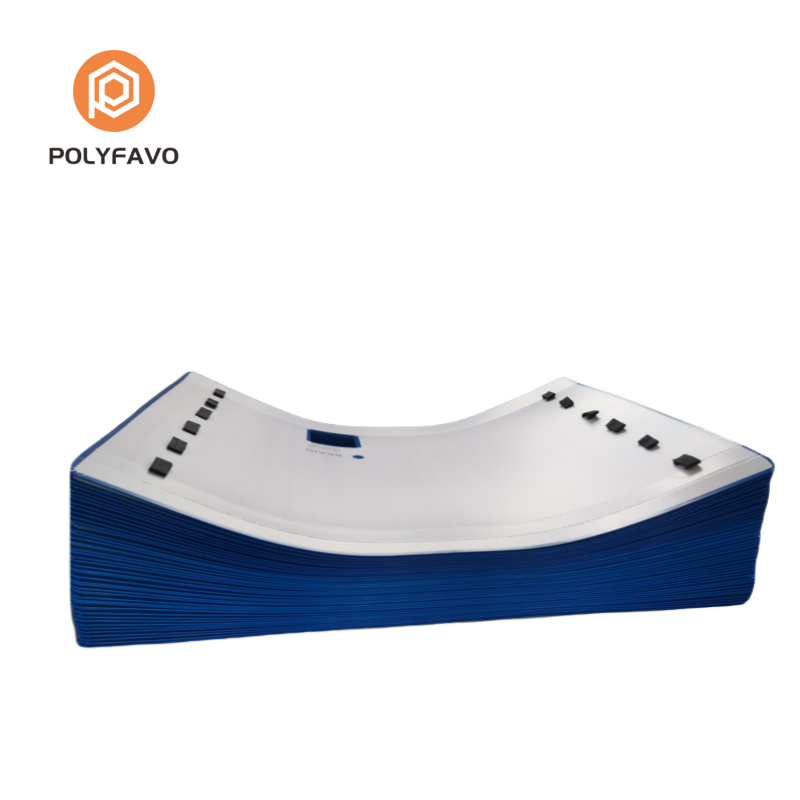
The manufacturing of honeycomb board represents a sophisticated engineering process that combines advanced polymer science with precision manufacturing techniques. These lightweight yet durable panels have revolutionized industries ranging from aerospace to construction, offering exceptional strength-to-weight ratios that traditional materials cannot match. Understanding the intricate process behind honeycomb board production reveals why these materials have become indispensable in modern manufacturing applications.
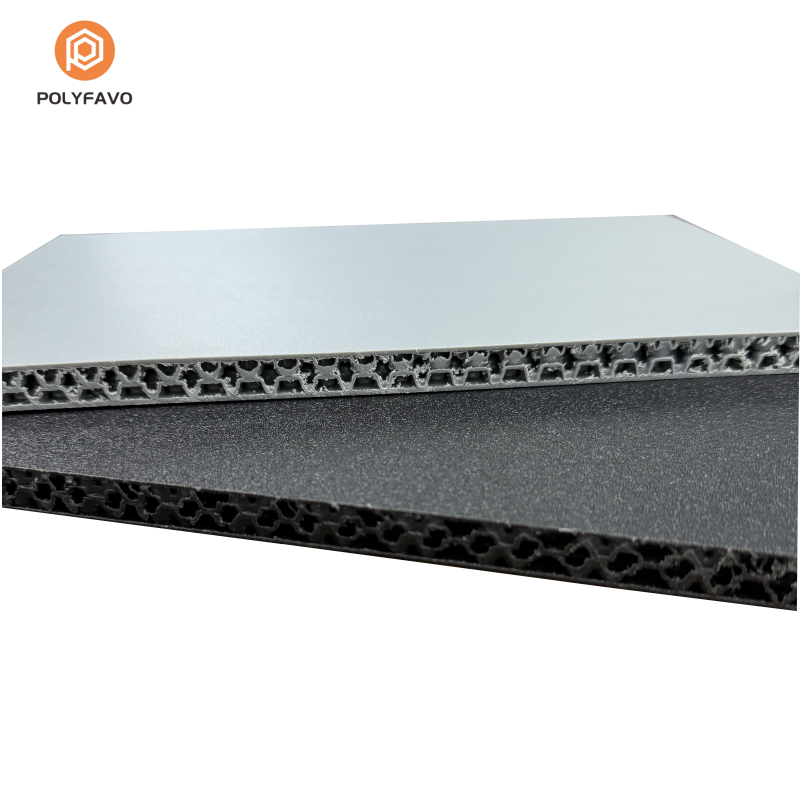
The production of honeycomb board involves multiple stages that require precise control over temperature, pressure, and material composition. Each phase of manufacturing contributes to the final product's structural integrity and performance characteristics. From raw material selection to final quality testing, every step in the honeycomb board manufacturing process demands attention to detail and adherence to strict industry standards.
Raw Material Selection and Preparation
Polypropylene Resin Selection
The foundation of quality honeycomb board manufacturing begins with selecting premium polypropylene resins that meet specific molecular weight and melt flow index requirements. These resins must demonstrate excellent chemical resistance, thermal stability, and processing characteristics that enable consistent extrusion performance. Manufacturing facilities typically source virgin PP resins from certified suppliers who can provide detailed material certifications and batch-to-batch consistency reports.
Quality control laboratories analyze incoming resin shipments using differential scanning calorimetry and melt flow indexers to verify material specifications. The resin preparation process includes drying procedures to remove moisture content below 0.02% to prevent processing defects during honeycomb board formation. Advanced facilities employ automated material handling systems that maintain strict segregation between different resin grades and prevent cross-contamination.
Additive Integration Systems
Modern honeycomb board production incorporates various additives to enhance performance characteristics including UV stabilizers, antioxidants, and colorants. These additives require precise dosing systems that can maintain consistent concentrations throughout production runs. Masterbatch systems often provide the most reliable method for incorporating additives while maintaining uniform distribution within the polymer matrix.
The integration process utilizes high-intensity mixing equipment that ensures complete dispersion of additives without degrading the base polymer. Temperature control during mixing prevents thermal degradation while achieving optimal blend homogeneity. Quality assurance protocols include regular sampling and testing to verify additive levels meet specification requirements for each honeycomb board product variant.
Extrusion Technology and Core Formation
Advanced Extrusion Die Design
The heart of honeycomb board manufacturing lies in sophisticated extrusion die systems that create the characteristic cellular structure. These dies feature precisely machined channels and flow distribution networks that ensure uniform material flow across the entire width of production. Die design incorporates computational fluid dynamics modeling to optimize flow patterns and eliminate potential weak points in the honeycomb board structure.
Temperature control within the extrusion die maintains material viscosity within optimal processing windows while preventing thermal degradation. Multiple heating zones allow operators to fine-tune temperature profiles based on material characteristics and production speed requirements. Advanced die systems include automated cleaning mechanisms that prevent material buildup and ensure consistent honeycomb board quality throughout extended production runs.
Core Structure Development
The formation of the hexagonal cellular structure requires precise control over expansion rates and cooling profiles as the extruded material exits the die. Air injection systems create the internal pressure necessary for cell expansion while maintaining uniform wall thickness distribution. This critical phase determines the final density and mechanical properties of the honeycomb board structure.
Cooling systems employ calibrated air flows and temperature gradients to control the solidification process and lock in the desired cellular geometry. The expansion process requires careful monitoring to prevent over-expansion that could weaken cell walls or under-expansion that reduces the material's efficiency. Sophisticated feedback control systems adjust processing parameters in real-time based on continuous quality measurements.
Lamination and Surface Treatment Processes
Skin Layer Application
Many honeycomb board applications require protective skin layers that provide enhanced surface properties and environmental resistance. The lamination process applies these skins using heat and pressure while the core material remains within specific temperature ranges that prevent structural deformation. Skin materials may include polypropylene films, non-woven fabrics, or specialized coatings depending on end-use requirements.
Adhesive systems used in skin lamination must provide strong bonds without penetrating deeply into the honeycomb board core structure. Hot-melt adhesives applied at controlled temperatures ensure proper wetting and adhesion while maintaining production efficiency. Quality control measures include peel strength testing and environmental aging studies to verify long-term adhesion performance under service conditions.
Surface Texturing and Finishing
Surface treatment processes can modify honeycomb board properties to meet specific application requirements including slip resistance, printability, or aesthetic appearance. Mechanical texturing creates controlled surface patterns that enhance grip or improve paint adhesion characteristics. Chemical treatments may modify surface energy to improve compatibility with adhesives or coatings used in downstream processing.
Corona treatment systems increase surface energy levels on honeycomb board surfaces to improve ink adhesion for printing applications. These treatments require careful control of power levels and exposure times to achieve desired surface modifications without damaging the underlying structure. Quality testing includes contact angle measurements and ink adhesion tests to verify treatment effectiveness.
Quality Control and Testing Methodologies
Dimensional Accuracy Verification
Precision measurement systems monitor honeycomb board thickness, width, and cell size parameters throughout production to ensure dimensional consistency. Laser scanning devices provide non-contact measurement capabilities that can detect variations as small as 0.1 millimeters across the full width of production. Statistical process control systems track dimensional data and alert operators to trends that could indicate equipment drift or material variations.
Cell structure analysis utilizes high-resolution imaging systems to verify hexagonal geometry and wall thickness uniformity. These measurements correlate directly with mechanical performance characteristics and help optimize processing parameters. Automated inspection systems can identify defects such as collapsed cells or incomplete expansion that could compromise honeycomb board performance in service applications.
Mechanical Property Testing
Comprehensive mechanical testing programs evaluate compressive strength, flexural properties, and impact resistance of honeycomb board products. Testing protocols follow established industry standards while accounting for the unique characteristics of cellular materials. Compression testing requires specialized fixtures that distribute loads evenly across the honeycomb board surface to prevent localized failures that could skew results.
Environmental testing subjects honeycomb board samples to temperature cycling, humidity exposure, and chemical resistance evaluations that simulate service conditions. These tests verify that materials maintain required performance levels throughout expected service life. Accelerated aging protocols provide data on long-term performance trends without requiring extended real-time testing periods.
Production Optimization and Efficiency Enhancement
Process Automation Systems
Modern honeycomb board manufacturing facilities employ sophisticated automation systems that optimize production parameters in real-time based on quality feedback and efficiency metrics. These systems integrate data from multiple sensors throughout the production line to identify optimization opportunities and prevent quality issues before they occur. Machine learning algorithms analyze historical production data to predict optimal parameter settings for different product specifications.
Automated material handling systems ensure consistent feed rates and material properties while reducing labor requirements and improving safety. Robotic systems handle finished honeycomb board products during cutting, stacking, and packaging operations with precision that exceeds manual capabilities. Integration with enterprise resource planning systems provides real-time visibility into production status and inventory levels.
Energy Management and Sustainability
Energy-efficient manufacturing processes reduce operational costs while minimizing environmental impact of honeycomb board production. Heat recovery systems capture waste heat from extrusion and cooling operations to preheat incoming materials or provide space heating for facilities. Variable frequency drives on motor systems adjust power consumption based on actual load requirements rather than operating at constant maximum capacity.
Recycling programs process manufacturing waste and off-specification honeycomb board materials back into production streams, reducing raw material consumption and waste disposal costs. Closed-loop water systems minimize water usage while maintaining required cooling performance. Sustainable practices throughout the manufacturing process align with corporate environmental goals and customer sustainability requirements.
Applications and Market Considerations
Industry-Specific Requirements
Different industries impose unique requirements on honeycomb board products that influence manufacturing approaches and quality specifications. Aerospace applications demand exceptional strength-to-weight ratios and flame retardant properties that require specialized additives and processing techniques. Automotive applications prioritize impact resistance and dimensional stability across wide temperature ranges that affect material selection and processing parameters.
Construction industry applications emphasize long-term durability and resistance to environmental exposure that influences skin layer selection and surface treatments. Food packaging applications require compliance with food contact regulations that restrict allowable additives and processing aids. Each application segment requires dedicated quality systems and testing protocols to ensure compliance with relevant industry standards.
Market Trends and Innovation Drivers
Growing demand for lightweight materials drives continuous innovation in honeycomb board manufacturing technology and product development. Advanced polymer formulations provide enhanced performance characteristics while maintaining the processing advantages that make honeycomb board production economically viable. Market pressures for reduced material costs encourage development of more efficient manufacturing processes and utilization of recycled content.
Customization capabilities allow manufacturers to tailor honeycomb board properties for specific applications through modifications to cell geometry, density, and surface characteristics. Digital manufacturing technologies enable rapid prototyping and small-batch production that supports market development for specialized applications. Innovation in manufacturing technology continues to expand the range of properties achievable in honeycomb board products.
FAQ
What determines the strength characteristics of honeycomb board during manufacturing
The strength characteristics of honeycomb board are primarily determined by cell wall thickness, cell size, material density, and the quality of the polymer matrix. During manufacturing, precise control over expansion rates and cooling profiles ensures uniform cell geometry that maximizes structural efficiency. The extrusion temperature and die design significantly influence wall thickness distribution, which directly correlates with compressive and flexural strength properties.
How does manufacturing process affect honeycomb board dimensional stability
Manufacturing process parameters including cooling rates, stress relief procedures, and material orientation control dimensional stability in honeycomb board products. Rapid cooling can introduce internal stresses that cause dimensional changes over time, while controlled cooling profiles minimize these effects. Post-production annealing processes can further enhance dimensional stability by relieving residual stresses created during the forming process.
What quality control measures ensure consistent honeycomb board performance
Quality control in honeycomb board manufacturing includes continuous monitoring of raw material properties, real-time process parameter tracking, and comprehensive testing of finished products. Statistical process control systems identify variations that could affect performance before they result in out-of-specification material. Regular calibration of measurement equipment and adherence to standardized testing protocols ensure reliable quality data throughout production operations.
How do manufacturers customize honeycomb board properties for specific applications
Manufacturers customize honeycomb board properties through modifications to material formulation, cell geometry, density, and surface treatments. Die design changes can alter cell size and shape to optimize properties for specific load conditions. Additive packages provide enhanced performance characteristics such as flame retardancy, UV resistance, or antistatic properties. Surface lamination and treatment processes add functional capabilities including barrier properties, printability, or enhanced chemical resistance.
Table of Contents
- Raw Material Selection and Preparation
- Extrusion Technology and Core Formation
- Lamination and Surface Treatment Processes
- Quality Control and Testing Methodologies
- Production Optimization and Efficiency Enhancement
- Applications and Market Considerations
-
FAQ
- What determines the strength characteristics of honeycomb board during manufacturing
- How does manufacturing process affect honeycomb board dimensional stability
- What quality control measures ensure consistent honeycomb board performance
- How do manufacturers customize honeycomb board properties for specific applications