EN
EN

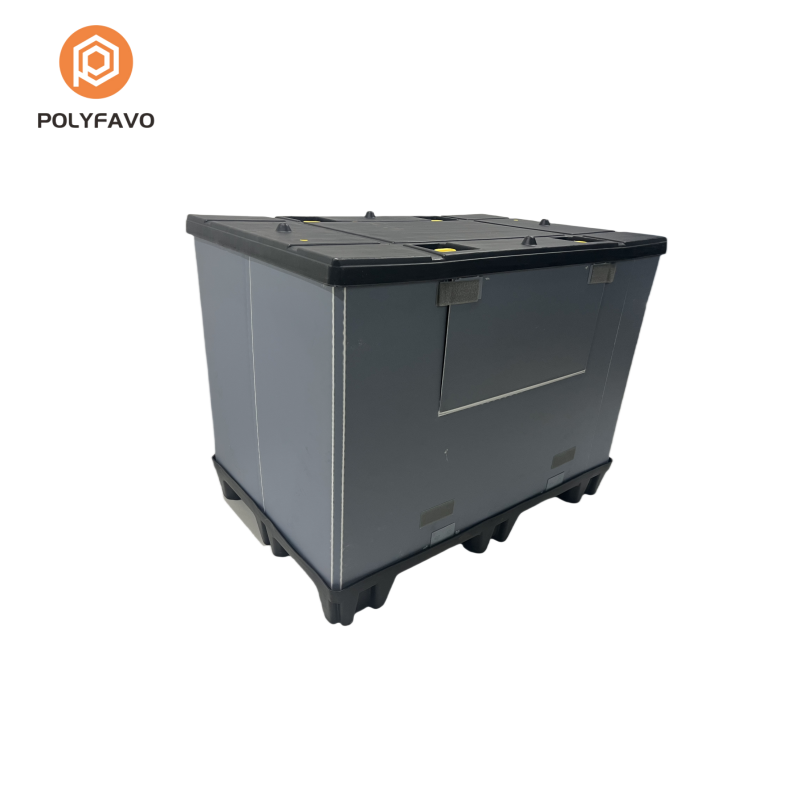
When it comes to bulk packaging solutions for industrial and commercial logistics, the choice between a pallet sleeve box and a standard corrugated box is far more consequential than it might initially appear. Both packaging formats serve the purpose of containing and transporting goods, yet they differ dramatically in how they handle stacking pressure, cargo integrity, and reusability across supply chains. Making the wrong choice can result in crushed goods, wasted floor space, increased freight costs, and compromised load stability — all of which translate directly into operational losses.
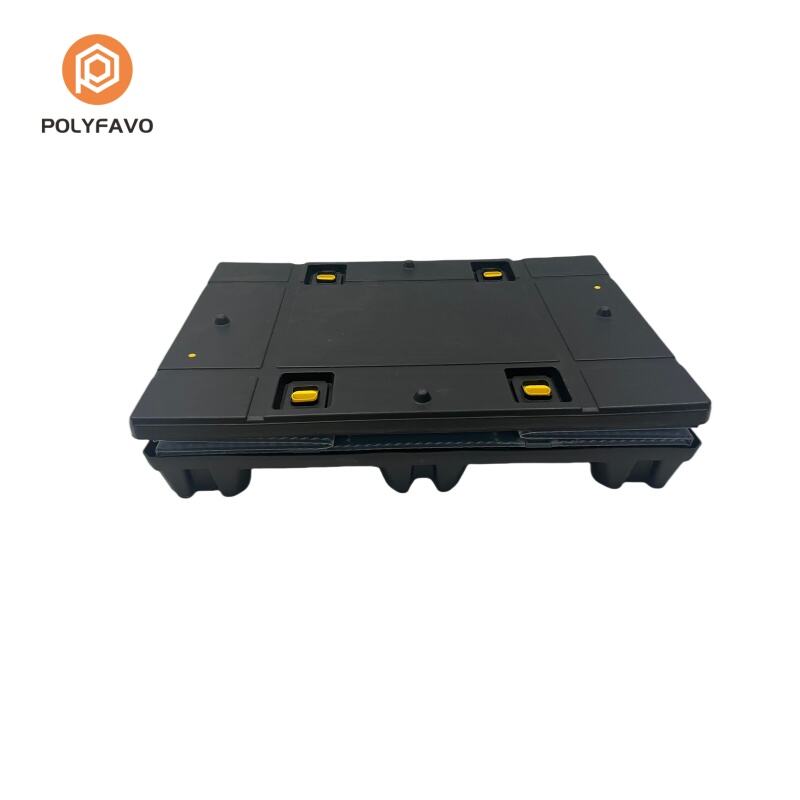
Understanding the structural differences, load-bearing mechanics, and cargo protection capabilities of each format is essential for procurement managers, warehouse operators, and logistics professionals. This article conducts a direct comparison between the pallet sleeve box design and the conventional standard box, analyzing which option delivers superior stacking strength and more reliable cargo protection under real industrial conditions. The analysis is rooted in material science, packaging engineering principles, and practical supply chain scenarios.
Understanding the Two Packaging Formats
What Defines a Pallet Sleeve Box
A pallet sleeve box, also called a pallet collar box or collar sleeve box, is a modular packaging system built around three core components: a base pallet, a corrugated or solid board sleeve collar, and a top lid. The sleeve functions as the structural wall of the container, sitting directly on the pallet base and forming an enclosed compartment when the lid is applied. This three-part architecture is designed specifically to accommodate heavy, bulky, or irregularly shaped goods that would challenge standard cardboard packaging formats.
The pallet sleeve box design emphasizes vertical load distribution. Because the collar sleeve fits tightly onto the pallet base and supports the lid from beneath, forces applied from above during stacking are transmitted through the sleeve walls and down into the pallet structure itself. This creates a mechanically sound pathway for compressive loads, reducing the risk of structural failure during multi-tier warehouse stacking or long-haul transportation.
Another defining characteristic of the pallet sleeve box is its collapsible and reusable nature. The collar sleeves can be folded flat when not in use, dramatically reducing return freight costs and storage footprint. For businesses operating closed-loop supply chains or managing high-frequency bulk shipments, this feature alone represents a significant economic advantage over single-use packaging alternatives.
What Constitutes a Standard Box
A standard corrugated cardboard box is the most widely recognized packaging format in global logistics. It consists of a single integrated structure — typically a bottom, four walls, and a top — formed from fluted corrugated board. Standard boxes are produced in a vast array of sizes and flute grades, making them highly versatile for general-purpose packaging across countless industries. Their low per-unit cost and universal availability make them the default choice for many packaging applications.
However, the standard box has inherent structural limitations when subjected to heavy loads or prolonged stacking environments. The corrugated walls of a standard box bear the full weight of loads placed on top, and their resistance to edge crush and top load compression decreases significantly with moisture exposure, improper stacking alignment, and extended storage durations. These vulnerabilities become critical factors in high-density warehouse environments where palletized loads are stacked two or three tiers high.
Standard boxes are also designed as single-use or limited-reuse items in most industrial applications. While some operations recycle or repurpose them for secondary packaging, their structural integrity degrades noticeably after the first use cycle, particularly under humid warehouse conditions. This positions the standard box as a cost-effective solution for light to medium-duty applications but a less reliable choice when cargo protection and stacking strength are primary concerns.
Stacking Strength: A Structural Comparison
How the Pallet Sleeve Box Manages Compressive Load
The stacking strength of a pallet sleeve box is fundamentally superior to that of a standard box because of how compressive forces are managed through its modular structure. When a load is placed on top of a pallet sleeve box, the force travels through the rigid lid and into the sleeve collar walls. These walls, often constructed from multi-ply corrugated board or solid fiberboard, are engineered to maintain their compressive resistance even under sustained loads over extended periods.
Because the pallet sleeve box sits on a hardwood or pressboard pallet base, the entire assembly benefits from a stable, level foundation that prevents the localized stress concentrations that cause standard boxes to buckle at the corners. The pallet base also elevates the cargo off the ground, protecting it from floor moisture and enabling forklift handling — two additional factors that contribute to maintaining structural integrity throughout the logistics journey.
Industry practitioners frequently report that a pallet sleeve box can sustain compressive loads several times greater than comparably sized standard boxes of the same material grade. This is not simply a function of material thickness but of the load pathway architecture. The pallet sleeve box converts what would be a bending or buckling failure mode in a standard box into a pure compression scenario, which corrugated and fiberboard materials handle far more efficiently.
Where Standard Boxes Reach Their Limits
Standard corrugated boxes rely heavily on the integrity of their corners and flap closures to resist top-load compression. Under ideal conditions, a properly sized standard box can handle moderate stacking in a controlled warehouse environment. However, real-world conditions rarely conform to ideal laboratory testing parameters. Humidity alone can reduce the compression strength of a standard corrugated box by thirty to forty percent, which is a catastrophic reduction in applications involving heavy unit loads or extended storage.
When standard boxes are stacked on pallets for transportation, any misalignment between boxes reduces the effective stacking area and concentrates stress on the walls rather than the corners — precisely where corrugated board is structurally weakest. This misalignment issue is amplified during transit, where vibration and shifting loads continuously redistribute compressive forces across the box structure in unpredictable ways. The result is progressive box deformation that can cause an entire pallet load to collapse or shift dangerously.
For operations involving heavy components, automotive parts, industrial equipment subassemblies, or dense consumer goods, these stacking limitations of standard boxes represent not just a product damage risk but a safety hazard for warehouse personnel. The pallet sleeve box eliminates these vulnerabilities through its structurally integrated design, making it the more appropriate choice for demanding stacking environments.
Cargo Protection: Environmental and Physical Factors
Protection Mechanisms of the Pallet Sleeve Box
Cargo protection in a pallet sleeve box extends well beyond stacking resistance. The enclosed collar sleeve and lid system creates a fully sealed compartment that shields contents from dust, moisture ingress, and incidental contact during forklift handling and pallet transfers. For industries managing sensitive components, finished goods with surface finish requirements, or moisture-sensitive materials, this level of enclosure protection is difficult to replicate with open-top or loosely secured standard boxes.
The pallet sleeve box also accommodates internal dunnage, foam inserts, and divider systems more effectively than standard boxes because its rigid walls maintain their shape and dimensional stability throughout the logistics process. This means that carefully arranged interior packaging solutions remain intact and continue performing their cushioning or segregation function from origin to destination — a consistency that cannot be assumed when using standard corrugated boxes that may deform during transit.
Additionally, the pallet-based configuration of a pallet sleeve box ensures that cargo is never placed directly on warehouse floors or loading dock surfaces, eliminating one of the most common sources of cargo contamination and moisture damage in industrial logistics. This elevation, combined with the sealed enclosure, makes the pallet sleeve box a holistic cargo protection solution rather than simply a containment vessel.
Cargo Protection Limitations of Standard Boxes
Standard boxes provide adequate protection for goods in transit under light to moderate conditions, but their protection capabilities decline sharply under stress. The flap closures of standard corrugated boxes are vulnerable to being bumped open during forklift handling, and their relatively thin walls offer limited resistance to puncture or abrasion from adjacent palletized loads. In mixed-load containers or trailers where different product types share space, standard boxes may suffer physical damage that compromises their contents without any visible external indication until the box is opened at destination.
Moisture remains the most persistent threat to standard box cargo protection. Even with moisture-resistant coatings, prolonged exposure to humid conditions causes the corrugated medium to absorb water, dramatically weakening the board and reducing its ability to protect contents from compression or impact. In cold chain logistics, where temperature differentials cause condensation, this weakness becomes particularly acute and can result in both structural failure and product spoilage within a single transit cycle.
For businesses that cannot tolerate inconsistent cargo protection performance, the standard box's vulnerability to environmental variables makes it a risky choice for high-value or sensitive cargo. The pallet sleeve box, with its structurally robust design and enclosed geometry, delivers more predictable protection outcomes across a wider range of environmental conditions and handling scenarios.
Operational and Economic Considerations for Choosing Correctly
When the Pallet Sleeve Box Delivers Superior Value
The pallet sleeve box is the clearly superior choice in scenarios characterized by heavy unit loads, multi-tier warehouse stacking, high-frequency reusable packaging cycles, and cargo with stringent protection requirements. Manufacturing operations that ship engine components, precision instruments, bulk hardware, or sensitive electronics will find that the pallet sleeve box consistently outperforms standard alternatives in both damage prevention and total packaging cost when evaluated over multiple use cycles.
The reusability factor of the pallet sleeve box deserves particular emphasis in economic comparisons. While the initial per-unit cost of a pallet sleeve box system is higher than a standard box, the ability to collapse and return the collar sleeves and reuse them across five, ten, or even twenty shipment cycles dramatically reduces the per-shipment packaging cost. For operations with reliable return logistics, this lifecycle cost advantage can render the pallet sleeve box significantly more economical than single-use corrugated alternatives within a relatively short deployment period.
The pallet sleeve box also contributes meaningfully to sustainability objectives. Reduced packaging waste, lower material consumption per shipment cycle, and the ability to use the same packaging asset repeatedly all align with corporate environmental responsibility frameworks and regulatory requirements that increasingly govern industrial packaging practices in major markets.
When Standard Boxes Remain a Practical Option
Standard boxes continue to be a practical and cost-effective packaging solution for light-duty applications, single-use shipments, irregular destinations without return logistics infrastructure, and goods with low stacking and environmental sensitivity. E-commerce fulfillment, retail distribution of consumer packaged goods, and document or small parts shipping are all contexts where the standard box performs adequately and its lower unit cost genuinely represents the most rational economic choice.
For businesses that do not have the volume or logistical infrastructure to justify a reusable pallet sleeve box program, investing in premium-grade corrugated standard boxes with moisture-resistant treatment and reinforced corner construction may deliver a pragmatic middle ground. However, it is important to recognize that even high-specification standard boxes do not replicate the structural stacking performance and cargo protection consistency of a purpose-built pallet sleeve box system in demanding industrial applications.
Ultimately, the selection logic should be driven by a clear assessment of cargo weight and dimensions, expected stacking height, transit duration and environmental conditions, return logistics feasibility, and total cost of ownership rather than initial unit price alone. When these factors are evaluated holistically, the pallet sleeve box typically emerges as the superior choice for any application where stacking strength and cargo protection are non-negotiable requirements.
FAQ
What makes a pallet sleeve box stronger than a standard box for stacking?
A pallet sleeve box achieves superior stacking strength because its modular design — with a rigid collar sleeve resting on a solid pallet base — creates a direct compressive load pathway from the top lid through the sleeve walls and into the pallet foundation. This structural geometry allows the pallet sleeve box to handle significantly greater compressive forces than a standard corrugated box, whose corner-and-wall construction is more susceptible to buckling, misalignment, and moisture-induced strength reduction.
Can a pallet sleeve box be used for goods with irregular shapes or dimensions?
Yes. One of the key advantages of the pallet sleeve box format is its adaptability to irregular or oversized goods. The collar sleeve can be configured in various heights by stacking multiple collar units, and the interior can be fitted with custom foam inserts, dividers, or dunnage to accommodate complex geometries. This makes the pallet sleeve box particularly well suited for industrial components, machinery parts, and other goods that do not conform to standard rectangular dimensions.
How does humidity affect the performance difference between the two packaging formats?
Humidity has a disproportionately negative effect on standard corrugated boxes compared to pallet sleeve boxes. Standard corrugated board can lose a substantial portion of its compressive strength when exposed to elevated moisture levels, making it unreliable in humid warehouse or transit environments. A pallet sleeve box, particularly when constructed from moisture-resistant treated board, maintains its structural integrity more consistently across varying humidity conditions, making it a more dependable choice for operations where environmental control cannot be guaranteed.
Is the pallet sleeve box cost-effective compared to standard boxes over time?
When evaluated on a per-shipment basis over multiple use cycles, the pallet sleeve box typically delivers a lower total packaging cost than single-use standard boxes. The collar sleeves are designed to be collapsed, returned, and reused repeatedly, meaning the initial capital investment in the pallet sleeve box system is amortized across many shipments. For businesses with consistent, high-volume shipping routes and return logistics capability, the pallet sleeve box frequently proves more economical than continuously purchasing and disposing of standard corrugated boxes.
Table of Contents
- Understanding the Two Packaging Formats
- Stacking Strength: A Structural Comparison
- Cargo Protection: Environmental and Physical Factors
- Operational and Economic Considerations for Choosing Correctly
-
FAQ
- What makes a pallet sleeve box stronger than a standard box for stacking?
- Can a pallet sleeve box be used for goods with irregular shapes or dimensions?
- How does humidity affect the performance difference between the two packaging formats?
- Is the pallet sleeve box cost-effective compared to standard boxes over time?