EN
EN

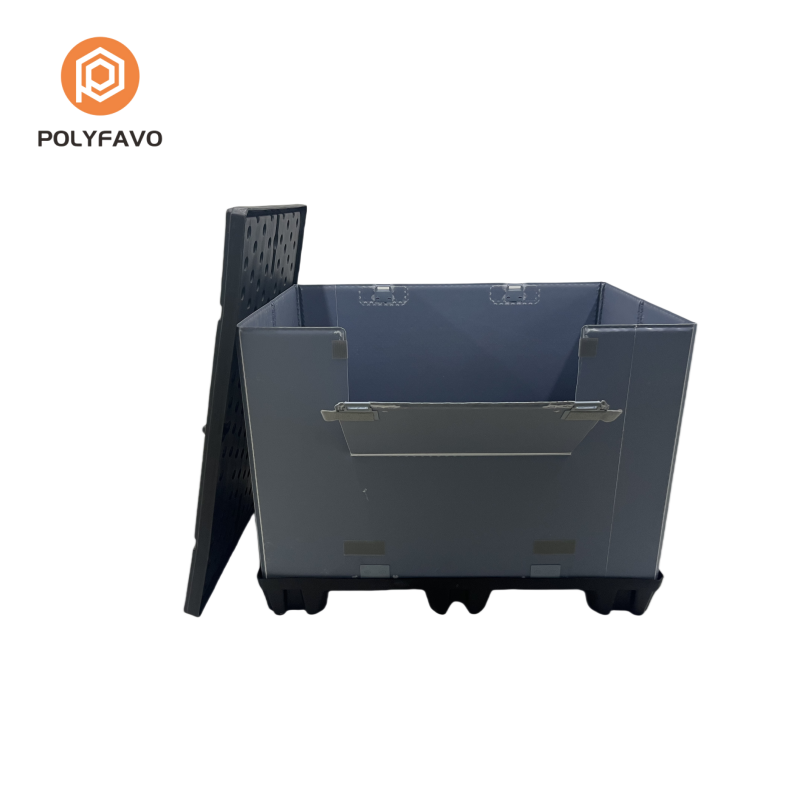
Selecting the right pallet sleeve box for your supply chain is not a decision to take lightly. The type of sleeve material you choose directly affects load stability, transit damage rates, storage efficiency, and overall packaging costs. With corrugated and honeycomb construction representing the two dominant options on the market today, understanding the structural and operational differences between them is essential for any logistics or procurement manager looking to optimize packaging performance.
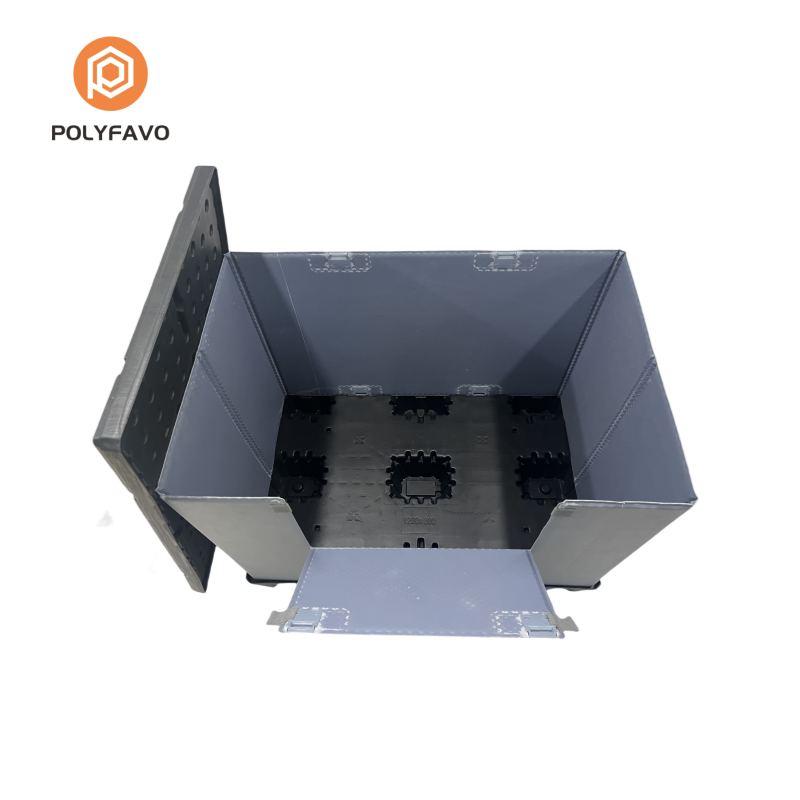
This guide breaks down the decision criteria that matter most when evaluating a pallet sleeve box for industrial and commercial supply chains. Whether you are shipping heavy automotive components, consumer goods, food-grade products, or fragile electronics, the choice between corrugated and honeycomb sleeves influences far more than just the outer packaging. It shapes your stacking capacity, return logistics, sustainability profile, and total cost of ownership across every shipment cycle.
Understanding What a Pallet Sleeve Box Actually Does
The Core Function of a Pallet Sleeve Box in Modern Logistics
A pallet sleeve box is a collapsible, open-ended packaging structure that sits on a standard pallet base and is secured by a top cap. Together, the base, sleeve, and cap form a complete unit load container that protects goods during storage and transit. Unlike rigid wooden crates or corrugated shippers, the sleeve component folds flat when empty, dramatically reducing return freight volume and warehouse storage requirements.
The design of a pallet sleeve box is specifically engineered for reusability and stackability. This makes it particularly well suited for closed-loop supply chains where containers are shipped out loaded and returned empty on a regular cycle. Industries ranging from automotive to retail have adopted this format because it combines the structural benefits of a pallet with the enclosed protection of a box, all in a format that scales efficiently with volume.
The sleeve itself is the most structurally significant element of the system. It bears vertical compression loads when pallets are stacked, resists lateral movement during transit, and provides the side protection that keeps goods contained. This is precisely why the material choice for the sleeve — corrugated or honeycomb — determines so much about the performance of the entire system.
Key Performance Dimensions to Evaluate
When assessing which pallet sleeve box configuration is right for your application, several performance dimensions deserve careful analysis. These include vertical stacking strength, edge crush resistance, moisture tolerance, weight, fold-flat efficiency, and compatibility with automated handling systems. No single material wins across every dimension, which is why understanding your specific supply chain conditions is essential before making a selection.
For example, a supply chain that handles heavy machine parts under dry warehouse conditions will have very different requirements from a food distribution network operating in refrigerated or high-humidity environments. Similarly, a high-frequency return loop where sleeves are folded and refolded hundreds of times demands different material fatigue characteristics than a one-way shipment application. Mapping your supply chain reality to these performance dimensions is the first analytical step.
Corrugated Pallet Sleeve Boxes: Strengths and Limitations
What Makes Corrugated a Popular Default Choice
Corrugated construction has long been the standard material for industrial packaging, and its application in the pallet sleeve box format is well established. Multi-wall corrugated board — typically double-wall or triple-wall — offers high edge crush test (ECT) ratings, reasonable moisture resistance when coated, and broad availability at competitive price points. For supply chains running moderate load weights with standard ambient storage conditions, corrugated sleeves deliver reliable performance.
Corrugated board is also highly customizable in terms of print quality and surface treatment. Brand graphics, handling instructions, barcodes, and compliance labels can be printed cleanly onto corrugated surfaces, which is an advantage in retail-ready or regulated industries. The manufacturing ecosystem for corrugated packaging is mature and globally distributed, making sourcing and lead time management comparatively straightforward for procurement teams.
From a recyclability standpoint, corrugated material scores well in most regional waste management frameworks. It breaks down readily in standard paper recycling streams, which supports corporate sustainability commitments without requiring specialized end-of-life processing. This environmental profile makes corrugated pallet sleeve box systems a practical choice for organizations with green logistics targets.
Where Corrugated Sleeves Fall Short
Despite its advantages, corrugated board has meaningful limitations in demanding supply chain environments. Its primary weakness is moisture sensitivity. Even with water-resistant coatings, prolonged exposure to humidity, condensation, or liquid contact degrades the flute structure and significantly reduces stacking strength. For cold chain logistics, outdoor storage, or high-humidity manufacturing environments, a corrugated pallet sleeve box may underperform over time.
Corrugated sleeves also exhibit a fatigue curve under repeated folding and unfolding cycles. In return-loop applications where the sleeve is collapsed and reassembled frequently, the fold lines gradually weaken, and structural integrity diminishes. This limits the effective reuse cycle compared to alternative materials, which has a direct impact on cost-per-trip calculations in closed-loop supply chains.
Additionally, corrugated board offers relatively lower cushioning performance per unit of thickness. For products requiring vibration dampening or point-load protection — such as electronics, glass, or precision components — the inherent cushioning of corrugated may not be sufficient without supplementary interior packaging, adding cost and complexity to the overall pallet sleeve box system.
Honeycomb Pallet Sleeve Boxes: Strengths and Limitations
The Structural Advantages of Honeycomb Core Construction
Honeycomb-core board brings a fundamentally different structural geometry to the pallet sleeve box format. The hexagonal cell structure distributes compressive forces evenly across the entire panel surface rather than through linear flute channels. This results in an exceptionally high strength-to-weight ratio, making honeycomb sleeves capable of supporting heavier unit loads while contributing less dead weight to the overall shipment mass.
In practical terms, a honeycomb pallet sleeve box can achieve equivalent or superior stacking strength at a lower panel thickness than corrugated alternatives. This translates to more interior usable volume for the same external footprint — a meaningful advantage when optimizing cube utilization in trailers or containers. For supply chains handling dense, heavy goods, the load-bearing capability of honeycomb construction can be a genuine operational differentiator.
Honeycomb panels also exhibit better resistance to point loading and surface puncture. The cell structure dissipates concentrated forces across adjacent cells, reducing the likelihood of catastrophic panel failure from forklift contact, sharp product edges, or rough handling conditions. This makes the honeycomb pallet sleeve box a preferred option in automotive, industrial equipment, and heavy manufacturing supply chains.
Practical Limitations of Honeycomb Sleeves
Honeycomb board typically carries a higher per-unit material cost than standard corrugated board. For high-volume, one-way applications where cost-per-trip is the dominant metric, this price premium may outweigh the structural benefits unless the load weight or handling conditions genuinely require honeycomb performance. Careful cost modeling across full shipment cycles is essential before switching from corrugated to honeycomb construction.
Honeycomb panels are generally stiffer and less easily customized for print or surface labeling compared to corrugated. For applications requiring extensive branding or complex label compliance, additional surface treatments or separate labeling panels may be needed on a honeycomb pallet sleeve box, adding steps to the packaging process. Organizations should factor this into their packaging specification and workflow design.
From a recyclability perspective, honeycomb paper board is broadly recyclable in standard streams, but the combination of materials in some composite honeycomb panels may complicate processing depending on regional waste infrastructure. It is worth confirming end-of-life compatibility with your specific waste management partners before committing to honeycomb construction across a large-scale deployment of pallet sleeve box systems.
Decision Framework: Matching Material to Supply Chain Conditions
Load Weight, Stack Height, and Transit Stress Profile
The most critical starting point in choosing a pallet sleeve box is the weight of the goods being packaged and the number of pallet tiers expected in storage or transit. For unit loads under 500 kg with standard two-to-three tier stacking in controlled warehouse environments, a well-specified corrugated pallet sleeve box will typically perform adequately. For loads exceeding this threshold, or where four or more tiers are required, honeycomb construction merits serious consideration due to its superior compression resistance.
Transit stress profile matters equally. Supply chains that involve long-haul road transport, multi-modal shipping across ocean and rail, or rough handling in distribution hubs place significantly higher vibrational and shock loads on packaging. In these conditions, the cushioning and structural resilience characteristics of the sleeve material directly influence product damage rates. A pallet sleeve box destined for complex multi-leg transit should be evaluated under realistic handling simulations before final specification.
Environmental Conditions and Return-Loop Frequency
Temperature, humidity, and exposure to liquids are non-negotiable evaluation factors for any pallet sleeve box selection. Cold chain supply chains, outdoor loading docks, and high-humidity manufacturing floors create conditions that can rapidly degrade untreated corrugated board. If your operational environment involves consistent moisture exposure, either specify a heavily coated corrugated sleeve or evaluate honeycomb board with moisture-resistant facing as an alternative.
Return-loop frequency — how many times the sleeve will be folded, transported empty, and reassembled — is a key economic variable. In high-frequency closed loops with weekly or daily cycles, the durability of the sleeve material determines cost-per-trip economics. Honeycomb sleeves generally demonstrate better fold fatigue performance over extended reuse cycles, while corrugated sleeves may require earlier replacement under identical usage patterns. Calculating total lifecycle cost rather than unit purchase price gives a more accurate picture of true supply chain economics.
Additionally, consider the compatibility of your pallet sleeve box design with existing handling infrastructure. Automated conveyor systems, robotic palletizers, and narrow-aisle storage environments have specific dimensional and rigidity requirements. A sleeve that performs well structurally but does not interface cleanly with your warehouse automation creates hidden friction costs that can erode the efficiency gains the format is designed to deliver.
Practical Specification Steps Before Finalizing Your Choice
Conducting a Packaging Needs Assessment
Before requesting samples or issuing purchase orders, complete a structured needs assessment that documents your product weight range, pallet dimensions, maximum stack height, environmental exposure conditions, and expected reuse cycles. This data set forms the technical brief that enables meaningful comparison between corrugated and honeycomb pallet sleeve box configurations. Without it, specification decisions default to guesswork or habit rather than supply chain evidence.
Request compression test data from suppliers that reflects your actual stacking conditions rather than laboratory ideal conditions. Real-world compression performance at elevated humidity levels or after multiple fold cycles often differs significantly from dry-condition test ratings. Insisting on condition-matched performance data ensures that your pallet sleeve box specification reflects operational reality rather than best-case benchmarks.
Piloting and Measuring Performance in Real Conditions
A pilot program using both corrugated and honeycomb sleeve variants across a defined shipment run is the most reliable way to validate your specification decision. Track damage incidents, sleeve condition after each reuse cycle, handling time at packing and unpacking stations, and total cost across the pilot volume. This empirical data eliminates ambiguity and gives procurement and logistics teams a defensible basis for the final pallet sleeve box standard.
Engage your operational teams — warehouse staff, transport coordinators, and quality inspectors — in the pilot evaluation. Frontline observations about ease of assembly, sleeve condition on arrival, and handling behavior under real conditions often surface performance issues that laboratory testing misses. A pallet sleeve box that works well across the full human and mechanical handling chain will deliver consistent results at scale.
FAQ
What is the main structural difference between a corrugated and honeycomb pallet sleeve box?
A corrugated pallet sleeve box uses a fluted paper core between flat liner sheets to provide compression and cushioning performance. A honeycomb pallet sleeve box uses a paper honeycomb core with hexagonal cells that distribute load forces more evenly across the panel surface. Honeycomb generally delivers a higher strength-to-weight ratio, while corrugated offers broader availability and lower base cost for standard applications.
Can a pallet sleeve box be reused multiple times in a closed-loop supply chain?
Yes, the pallet sleeve box format is specifically designed with reusability in mind. The collapsible sleeve folds flat for return shipment, and the base and cap components are engineered for repeated assembly cycles. Honeycomb sleeves typically withstand more fold cycles before structural fatigue becomes a concern, making them preferable for high-frequency return loops, while corrugated versions are better suited for lower-frequency or one-way applications.
How does moisture affect the performance of a pallet sleeve box?
Moisture is one of the most significant threats to the structural performance of a pallet sleeve box. Standard corrugated board can lose a substantial portion of its compression strength when exposed to humidity or liquid contact because moisture weakens the paper fiber structure. Corrugated sleeves with water-resistant coatings offer improved protection, but honeycomb panels with moisture-resistant facings generally provide better sustained performance in consistently humid or cold chain environments.
What pallet dimensions does a standard pallet sleeve box accommodate?
Most pallet sleeve box systems are engineered to fit standard pallet footprints such as 1200 x 800 mm Euro pallets or 1200 x 1000 mm industrial pallets, but custom dimensions are widely available. The sleeve height is also variable and can be specified to match the load height requirements of specific product types. When selecting a pallet sleeve box, it is important to confirm that the sleeve dimensions align precisely with both your pallet base and your storage or racking system clearances to ensure compatibility across the full handling chain.
Table of Contents
- Understanding What a Pallet Sleeve Box Actually Does
- Corrugated Pallet Sleeve Boxes: Strengths and Limitations
- Honeycomb Pallet Sleeve Boxes: Strengths and Limitations
- Decision Framework: Matching Material to Supply Chain Conditions
- Practical Specification Steps Before Finalizing Your Choice
-
FAQ
- What is the main structural difference between a corrugated and honeycomb pallet sleeve box?
- Can a pallet sleeve box be reused multiple times in a closed-loop supply chain?
- How does moisture affect the performance of a pallet sleeve box?
- What pallet dimensions does a standard pallet sleeve box accommodate?