EN
EN

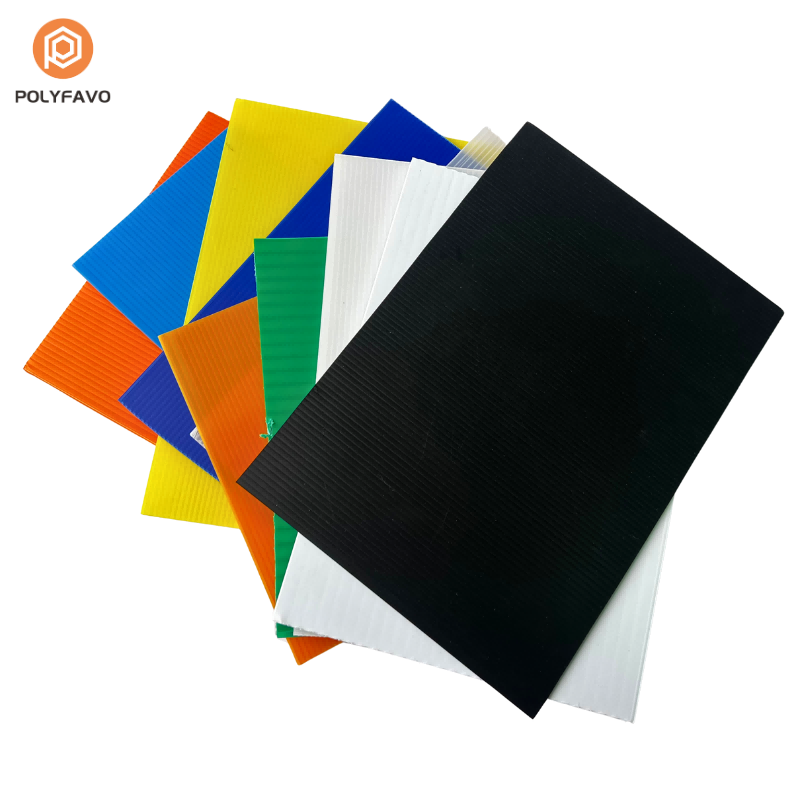
Fabricating a corrugated polypropylene sheet into a finished industrial or packaging component requires far more precision than simply cutting the material to size. Each processing step — from sealing exposed flute edges to die-cutting custom profiles, scoring fold lines, and welding joints — directly affects the structural integrity, appearance, and functional lifespan of the final product. Whether you are producing reusable shipping containers, point-of-sale displays, protective packaging inserts, or industrial dividers, understanding how to properly work with a corrugated polypropylene sheet is essential to achieving consistent, high-quality results.
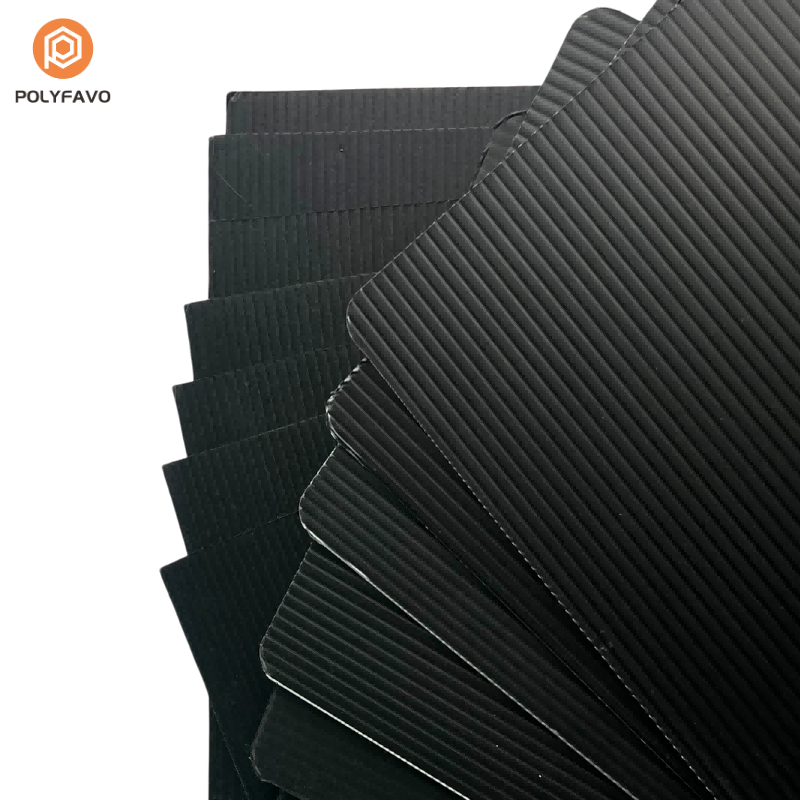
This fabrication guide addresses each major processing technique in practical depth, explaining not only how each method works but why it matters for the end application. The corrugated polypropylene sheet is a lightweight, chemically resistant, and mechanically resilient thermoplastic material that responds well to a range of converting techniques when the correct parameters are applied. By mastering these five core processes — edge sealing, die-cutting, scoring, folding, and welding — fabricators and product designers can unlock the full potential of this versatile material in demanding B2B environments.
Understanding the Structure of Corrugated Polypropylene Sheet Before Fabrication
The Fluted Core and Its Fabrication Implications
A corrugated polypropylene sheet is composed of two flat outer liner faces bonded to an internal fluted core, all extruded from virgin or recycled polypropylene resin in a single continuous profile. This hollow twin-wall structure is what gives the material its impressive strength-to-weight ratio. However, the open flute channels running along the sheet's length also create specific challenges that must be addressed during fabrication. Any cut made perpendicular to the flute direction exposes the internal channels, which can trap moisture, debris, or contaminants unless properly sealed.
Understanding flute orientation is therefore the first step before beginning any fabrication workflow. When planning die-cutting layouts or scoring positions, the fabricator must account for whether cuts are running parallel or perpendicular to the flutes. Cuts parallel to the flutes produce clean, closed edges that require no additional sealing, whereas cuts across the flutes expose hollow cavities that need treatment. This structural awareness influences every downstream process applied to the corrugated polypropylene sheet.
Material Grades and Their Influence on Processing
Not all corrugated polypropylene sheet grades behave identically during fabrication. Thickness typically ranges from 2mm to 6mm or more, and the density of the flute structure, the surface treatment, and the resin formulation all affect how the sheet responds to heat, pressure, and cutting tools. Thicker, higher-density sheets require greater die-cutting force and more heat input during welding, while thinner grades must be handled carefully during scoring to avoid cracking the liner faces.
Surface treatments such as corona discharge activation improve ink adhesion for printing but do not significantly alter mechanical processing behavior. However, UV-stabilized or flame-retardant grades may contain additives that influence how the material responds to thermal processing steps like edge sealing and welding. Fabricators working with specialty-grade corrugated polypropylene sheet should always verify material specifications before finalizing processing parameters.
Edge Sealing: Protecting Exposed Flute Channels
Why Edge Sealing Is Critical for Product Performance
When a corrugated polypropylene sheet is cut across its flute direction, the resulting edge exposes dozens of parallel hollow channels. In many applications — particularly food packaging, pharmaceutical logistics, clean-room environments, or outdoor signage — these open edges are a liability. Moisture, insects, and fine particles can migrate into the channels, adding weight, promoting contamination, and weakening the sheet's load-bearing properties over time. Edge sealing closes these channels and restores the clean, professional appearance expected in finished products.
Edge sealing also plays a structural role. An unsealed edge is susceptible to delamination under repeated flexing or impact, as the bond between the liner faces and the flute core can be compromised when moisture infiltrates. For applications involving reusable containers or long-cycle logistics packaging, proper edge sealing significantly extends the service life of components made from corrugated polypropylene sheet.
Common Edge Sealing Methods and Their Applications
The most widely used edge sealing technique is hot-air or heat-knife sealing, in which a calibrated heat source is directed at the exposed flute edge, causing the polypropylene to soften and the channel walls to collapse inward and fuse. This process creates a hermetically closed edge with no additional material required and is ideal for high-volume automated production lines. The temperature and dwell time must be controlled precisely — typically between 180°C and 220°C — to achieve full channel closure without distorting the sheet face or inducing warpage.
An alternative method involves applying self-adhesive edge tape, plastic edge extrusions, or extruded polypropylene edge profiles over the cut edge. These mechanical sealing approaches are preferred when aesthetic consistency is paramount, such as in retail display applications. Tape sealing is low-cost and fast but may not provide the durability needed for industrial reuse cycles. Extruded edge profiles offer better mechanical protection and can add rigidity to the corrugated polypropylene sheet assembly, making them a popular choice for heavier-duty fabricated containers. A third method involves applying a bead of hot-melt adhesive along the edge, which fills the channels and cures to a solid, moisture-resistant seal suitable for moderate-duty applications.
Die-Cutting: Achieving Precise Custom Profiles
Tooling Design for Corrugated Polypropylene Sheet
Die-cutting is one of the most common converting operations applied to corrugated polypropylene sheet, enabling fabricators to produce net-shape blanks for boxes, trays, folders, and custom inserts from flat sheet stock. Unlike paper-based corrugated, polypropylene requires cutting rules with a higher sharpness specification and, in many cases, increased cutting pressure to cleanly sever both liner faces and the flute core in a single stroke. Standard steel-rule dies used for cardboard often produce ragged or partially cut edges when applied to polypropylene without modification.
The cutting rule bevels should be optimized for plastic substrates — typically a two-bevel or center-bevel profile with a blade height and hardness suited to the sheet's gauge. Cutting boards made from high-density materials provide the necessary backing rigidity. For complex profiles with tight radii or fine detail features, laser-cut or CNC-machined steel-rule dies deliver the dimensional accuracy needed to maintain tight tolerances when blanking from corrugated polypropylene sheet.
Kiss-Cut and Through-Cut Strategies
In some applications, a partial or kiss-cut is preferable to a full through-cut. A kiss-cut penetrates the upper liner and flute core of the corrugated polypropylene sheet without fully severing the lower liner, creating a partially attached tab or flap that the end user can break free along a perforated line. This technique is used in packaging designs where a controlled opening feature is required, such as in returnable packaging with break-away seals.
Full through-cuts must be clean and burr-free, particularly for products where the cut edge is visible or handled by end users. Using slightly heated die rules or introducing a brief heat-assist cycle reduces the tendency for polypropylene to produce fine filament burrs along the cut line. After die-cutting, a light deburring pass with a soft roller or manual finishing tool removes any residual material, leaving the corrugated polypropylene sheet blank with a clean profile ready for downstream operations.
Scoring and Folding: Creating Accurate Fold Lines
The Mechanics of Scoring Corrugated Polypropylene Sheet
Scoring a corrugated polypropylene sheet involves compressing and partially crushing the flute structure along a defined line to create a hinge zone where the material can be folded cleanly without cracking or delaminating. Unlike paper board, which scores easily by simple compression, polypropylene requires a more controlled scoring pressure and, in some cases, a mild heat pre-conditioning step to prevent the liner face from fracturing during folding. Cold scoring in ambient conditions below 15°C is particularly prone to producing white-stress cracking on the outer liner face.
Score blades used in die-cutting assemblies are typically rounded or channel-profile rules that displace rather than cut the material. The depth of the score — the degree to which the flute channels are compressed — must be calibrated to the sheet gauge and the fold angle required. An under-scored line will resist folding and spring back toward its original flat position, while an over-scored line may weaken the hinge to the point of failure under repeated flexing. Getting this balance right is particularly important when fabricating reusable packaging components from corrugated polypropylene sheet that must withstand hundreds of fold-unfold cycles.
Folding Techniques and Quality Considerations
Once a corrugated polypropylene sheet has been scored, it can be folded manually or using automated folder-gluers and bending machines. Manual folding is suitable for prototyping, short runs, or large-format components where automated equipment is impractical. The fold should be executed smoothly and consistently along the score line, with even pressure applied across the full width of the sheet to prevent localized stress concentrations that could initiate cracks.
For box and tray designs requiring 90-degree folds, a heated bar folder can significantly improve fold quality. The heated bar warms the polypropylene along the score line to approximately 120°C–140°C, temporarily softening the material so it folds cleanly and retains the desired angle after cooling. This approach virtually eliminates spring-back and is strongly recommended for thick-gauge corrugated polypropylene sheet above 4mm. After heated folding, the component should be held in a jig or fixture until it cools to room temperature, ensuring dimensional stability in the finished part.
Welding: Creating Permanent Structural Joints
Hot-Air and Extrusion Welding for Structural Assembly
Welding is the preferred method for creating permanent, load-bearing joints between two or more pieces of corrugated polypropylene sheet. Unlike adhesive bonding, welding produces a thermoplastic fusion joint in which the base materials are molecularly integrated, resulting in bond strengths that can approach or match the strength of the parent material when properly executed. This makes welding the fabrication method of choice for industrial containers, pallet boxes, automotive protective liners, and structural enclosures.
Hot-air welding uses a handheld or automated welding torch to direct a stream of heated air — typically at 280°C–320°C for polypropylene — at the joint interface while simultaneously feeding a polypropylene filler rod. The operator moves the torch and rod along the joint at a controlled speed, building up a continuous weld bead that fuses to both parent faces. This technique offers flexibility for complex joint geometries and repair work but requires skilled operators to maintain consistent bead profile and fusion depth across the corrugated polypropylene sheet joint.
Ultrasonic and Friction Welding Alternatives
For high-volume production environments, ultrasonic welding and friction welding offer faster cycle times and more consistent joint quality than hand welding. Ultrasonic welding applies high-frequency mechanical vibration through a shaped horn pressed against the joint interface of the corrugated polypropylene sheet assembly. The frictional heat generated at the interface melts the polypropylene locally, and when vibration ceases, the material solidifies under clamping pressure into a fully fused joint. This technique is best suited to smaller components with well-defined joint geometries and is widely used in automotive and electronics packaging applications.
Spin and linear friction welding are also applicable where the joint configuration allows relative motion between the two components. These methods generate heat entirely through interfacial friction without any external heat source, producing clean, flash-free joints in the corrugated polypropylene sheet components. Regardless of the welding method chosen, surface preparation is critical — joint surfaces must be clean, dry, and free from mold release agents, silicone contamination, or oxidized surface layers that would inhibit proper fusion. Light abrasion or solvent wiping immediately before welding ensures optimal bond quality.
Integrating the Five Processes into a Complete Fabrication Workflow
Sequencing Operations for Maximum Efficiency
In a professional fabrication environment, the five processes described in this guide are rarely executed in isolation — they are sequenced into a logical workflow that minimizes rework, reduces material waste, and ensures each operation sets up the next for success. The typical sequence begins with die-cutting flat blanks from full corrugated polypropylene sheet stock, followed immediately by edge sealing any exposed flute edges on the blanks before they move into the scoring and folding station. Sealing before folding prevents the compressed flute edges from absorbing moisture or debris during subsequent handling.
Once blanks are scored and folded into their three-dimensional form, welding is applied to lock corners, attach panels, or integrate additional structural components. Quality inspection at each stage — verifying edge seal integrity, cut-profile accuracy, fold angle consistency, and weld bead continuity — catches defects early and prevents downstream rework. Fabricators producing high volumes of corrugated polypropylene sheet components benefit greatly from investing in jigs and fixtures that hold parts in precise alignment during folding and welding, ensuring dimensional repeatability across production runs.
Quality Control and Common Fabrication Defects
Several common defects can arise during corrugated polypropylene sheet fabrication if process parameters are not properly controlled. Incomplete edge sealing — evidenced by visible open channel ends or bubbled, over-heated edges — compromises both aesthetics and contamination resistance. Die-cut profiles with ragged or torn edges indicate dull cutting rules or insufficient cutting pressure and will produce assembly problems downstream. Cold-cracked score lines, identified by white stress marks on the liner face, signal that scoring was performed at too low a temperature or with excessive blade depth.
Weld joint failures — including insufficient fusion depth, porosity within the bead, or adhesive-mode bonds that peel rather than fracture through the parent material — are typically caused by incorrect welding temperature, contaminated joint surfaces, or improper filler rod composition. Using polypropylene filler rod matched to the base material's melt flow index minimizes the risk of incompatible fusion behavior. Systematic process documentation, including recording temperature settings, dwell times, and tool conditions for each run, enables rapid diagnosis and correction of quality deviations in corrugated polypropylene sheet fabrication operations.
FAQ
What is the best temperature for heat-sealing the edges of a corrugated polypropylene sheet?
For most standard-grade corrugated polypropylene sheet between 3mm and 5mm in thickness, a heat-knife or hot-air edge sealing temperature of 190°C to 210°C delivers reliable channel closure without surface distortion. Thicker sheets may require temperatures toward the upper end of the range, while thinner grades should be processed closer to 180°C to avoid liner face melting. Always conduct a brief trial on scrap material to confirm the optimal temperature for a specific sheet grade and gauge before committing to full production.
Can corrugated polypropylene sheet be folded without scoring first?
Unscored corrugated polypropylene sheet will resist clean folding and is likely to crack, delaminate, or produce an irregular, rounded fold rather than a sharp crease. Scoring is essential to collapse the flute structure along the intended hinge line and provide a controlled bend zone. For thin gauges (2mm or below), very gentle hand-bending may produce an acceptable result in non-structural applications, but for any production scenario where consistent fold angles and long-term hinge durability are required, proper scoring is always necessary.
Which welding method produces the strongest joint in corrugated polypropylene sheet fabrication?
When properly executed, extrusion welding consistently produces the highest joint strength for structural assemblies made from corrugated polypropylene sheet. The continuous, high-volume filler bead deposited by extrusion welding equipment creates a deep fusion zone with excellent resistance to peel, shear, and impact loading. Hot-air hand welding is more versatile but more operator-dependent, making joint quality variable. Ultrasonic welding offers excellent repeatability for smaller, thinner-gauge components in high-volume production but is less suited to large-format structural joints.
How should die-cutting tools be maintained to ensure clean cuts in corrugated polypropylene sheet?
Cutting rule sharpness is the single most critical maintenance factor for clean die-cutting of corrugated polypropylene sheet. Rules should be inspected after every production run and replaced at the first sign of edge rolling, chipping, or dulling, as worn rules produce torn rather than cut edges that require additional finishing work. Cutting boards should also be rotated regularly to prevent the development of compression grooves that cause uneven cut depth. Applying a light silicone-free lubricant to the cutting rules can reduce polypropylene adhesion and extend tool life between replacements.
Table of Contents
- Understanding the Structure of Corrugated Polypropylene Sheet Before Fabrication
- Edge Sealing: Protecting Exposed Flute Channels
- Die-Cutting: Achieving Precise Custom Profiles
- Scoring and Folding: Creating Accurate Fold Lines
- Welding: Creating Permanent Structural Joints
- Integrating the Five Processes into a Complete Fabrication Workflow
-
FAQ
- What is the best temperature for heat-sealing the edges of a corrugated polypropylene sheet?
- Can corrugated polypropylene sheet be folded without scoring first?
- Which welding method produces the strongest joint in corrugated polypropylene sheet fabrication?
- How should die-cutting tools be maintained to ensure clean cuts in corrugated polypropylene sheet?