EN
EN

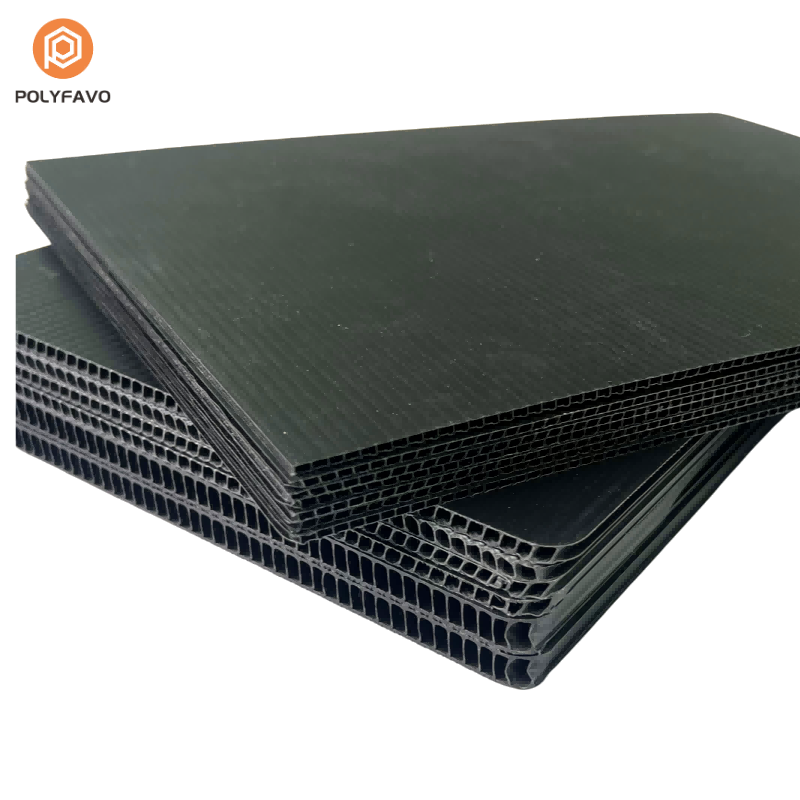
When businesses and industrial buyers are choosing between packaging, signage, or protective materials, the debate between corrugated plastic sheets and traditional cardboard comes up repeatedly. Both materials share a familiar fluted, layered structure, and both serve a wide range of applications — from shipping and storage to construction site protection and display boards. However, the performance gap between them becomes immediately apparent once real-world conditions enter the equation. Understanding which material offers better durability and moisture resistance is not just an academic comparison; it directly affects operational costs, product safety, and long-term material value.
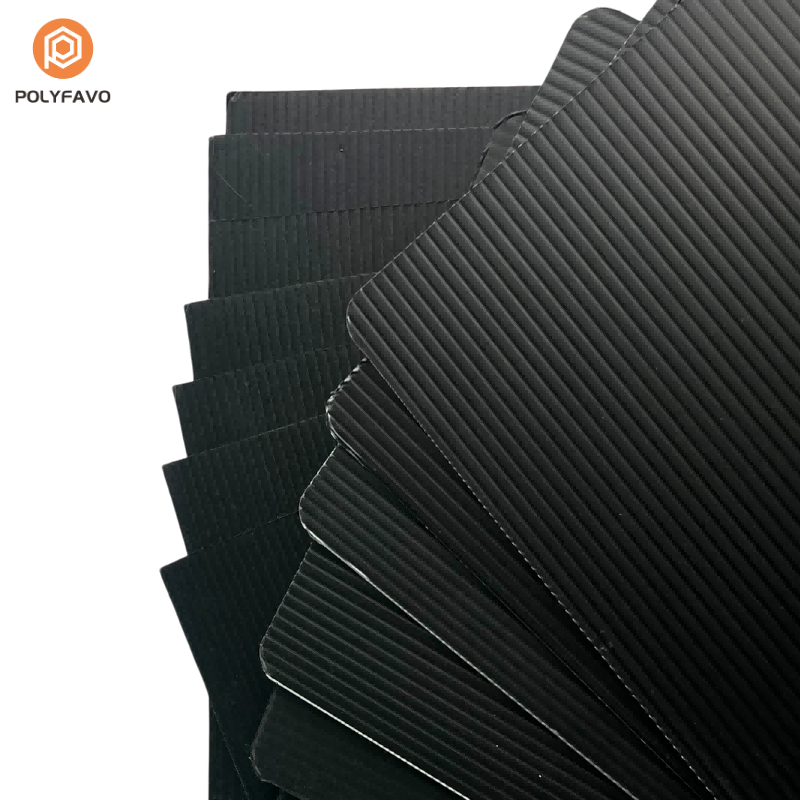
This article takes a detailed, side-by-side look at corrugated plastic sheets and cardboard across the most critical performance dimensions that matter to B2B buyers: structural durability, moisture and water resistance, load-bearing capacity, environmental exposure tolerance, and total cost of ownership. By the end, you will have a clear, evidence-based understanding of which material is the right fit for demanding applications — and why the answer increasingly points toward corrugated plastic sheets for environments where reliability cannot be compromised.
Understanding the Core Material Differences
What Corrugated Plastic Sheets Are Made Of
Corrugated plastic sheets, also widely known as twin-wall polypropylene sheets or Coroplast-style boards, are manufactured from high-density polypropylene (PP) or polyethylene (PE) resins. The structure consists of two flat outer layers connected by internal fluted channels running parallel along the length of the sheet. This hollow-channel architecture gives corrugated plastic sheets an exceptional strength-to-weight ratio that is difficult to match with paper-based alternatives.
The polymer composition of corrugated plastic sheets makes them fundamentally non-porous. Unlike cellulose-based materials, polypropylene does not absorb water at a molecular level. The resin itself repels moisture rather than reacting with it, which means the structural integrity of the sheet is maintained even after prolonged exposure to rain, humidity, or direct water contact. This characteristic alone sets corrugated plastic sheets apart from cardboard in virtually every outdoor or high-humidity application scenario.
Additionally, the manufacturing process for corrugated plastic sheets allows for UV stabilizers, flame retardants, and custom colorants to be added directly into the resin mix. This gives industrial users the ability to specify sheets that are tailored to very specific environmental or regulatory requirements, something that cardboard simply cannot replicate at the material level.
The Composition and Limitations of Cardboard
Corrugated cardboard is made from kraft paper — a wood pulp derivative — pressed into flat liners and a fluted medium, then bonded with starch-based adhesives. While this construction delivers decent compression strength under dry, controlled conditions, the fundamental properties of paper mean that cardboard is inherently vulnerable to any environment that introduces moisture, heat cycling, or mechanical abrasion over time.
The starch adhesives used to bond cardboard layers are water-soluble. When humidity rises or direct moisture contact occurs, the adhesive bond weakens, the fluted medium absorbs water and softens, and the overall board loses its compression strength rapidly. In logistics and storage environments where temperature swings and humidity are common, this structural vulnerability becomes a significant operational liability. Cardboard simply was not engineered to compete with corrugated plastic sheets in these conditions.
This is not to say cardboard has no role in modern packaging — for dry, indoor, short-cycle applications, it remains a cost-effective solution. The key is understanding where those limitations begin, and how they compare to what corrugated plastic sheets can deliver across a broader performance envelope.
Durability: A Direct Comparison Under Real Conditions
Mechanical Strength and Impact Resistance
Corrugated plastic sheets exhibit significantly higher impact resistance than cardboard of equivalent thickness. Polypropylene has an inherent flexibility that allows it to absorb impact energy and deform slightly without fracturing, then return toward its original shape. This elastic behavior is especially important in packaging applications where products are subjected to drops, vibration, and compressive stacking forces during transit.
Cardboard, by contrast, is a rigid but brittle composite. When impact forces exceed its elastic limit — which drops sharply as moisture content rises — it crushes, tears, or delaminate. Once a cardboard structure is damaged in this way, its load-bearing capacity is permanently reduced. Corrugated plastic sheets can absorb multiple impact events without cumulative structural degradation, making them a far more reliable choice for reusable packaging, floor protection panels, and construction hoarding applications.
In industrial environments where forklift traffic, mechanical handling, or heavy stacking loads are present, the mechanical durability advantage of corrugated plastic sheets becomes decisive. The sheets maintain their geometry under compressive load, which ensures that stacked goods remain stable and that the packaging structure continues to protect its contents throughout the supply chain.
Long-Term Durability and Reusability
One of the most commercially significant durability advantages of corrugated plastic sheets is their reusability. A quality polypropylene sheet can complete dozens of use cycles — through shipping, handling, cleaning, and re-deployment — without meaningful loss of structural performance. This is a fundamental shift from the single-use model that cardboard enforces by its very nature.
Cardboard degrades with each use cycle. Exposure to any moisture, pressure creasing, or abrasion accelerates this process. In logistics operations that run on tight margins, the cumulative cost of replacing single-use cardboard versus the amortized cost of reusable corrugated plastic sheets over the same volume of shipments often reveals a compelling economic case for the plastic alternative. The math becomes even more favorable when waste disposal and sustainability compliance costs are factored in.
For businesses operating in cold chain logistics, agricultural packaging, or outdoor construction, the durability differential between corrugated plastic sheets and cardboard is not marginal — it is the difference between a material that works reliably and one that becomes a failure point in the operation.
Moisture Resistance: Where the Gap Is Most Pronounced
Performance in Humid and Wet Environments
Moisture resistance is arguably the clearest performance differentiator between corrugated plastic sheets and cardboard. The polypropylene substrate used in corrugated plastic sheets is hydrophobic — it chemically repels water rather than absorbing it. Surface water beads and runs off, and the internal channel structure does not wick moisture through capillary action. This means that even after hours of rain exposure or submersion in shallow water, a corrugated plastic sheet retains its original strength, weight, and dimensional stability.
Cardboard behaves in the exact opposite way when exposed to moisture. The cellulose fibers that give it structure are hydrophilic, meaning they absorb water readily. As water penetrates the paper layers, the board swells, softens, and loses compression strength at an accelerating rate. A cardboard box left in a moderately humid environment — not even in direct contact with water — can lose a significant percentage of its stacking strength within hours, and can become structurally unusable within days.
For industries such as fresh produce distribution, cold storage logistics, outdoor event management, and construction site management, this moisture resistance gap makes corrugated plastic sheets the only viable choice. There is no amount of wax coating or moisture-resistant treatment that brings cardboard's moisture performance close to what corrugated plastic sheets deliver inherently through material composition.
Performance Under Temperature Cycling and Condensation
Beyond direct water exposure, corrugated plastic sheets also outperform cardboard in environments where temperature cycling creates condensation. Cold chain operations, refrigerated warehouses, and outdoor applications in coastal or tropical climates all involve repeated cycles of cooling and warming that generate condensation on and within packaging materials. Cardboard absorbs this condensation progressively, and repeated cycles cause the paper layers to weaken, delaminate, and eventually disintegrate.
Corrugated plastic sheets are unaffected by condensation cycles. The non-porous polymer surface does not absorb moisture, and the sheet's structural performance remains consistent whether the environment is cold and dry, hot and humid, or anything in between. This thermal stability also extends to direct temperature resistance — polypropylene maintains its mechanical properties across a working temperature range that comfortably covers most industrial and logistics applications.
The sealed edge construction available in premium corrugated plastic sheets further enhances moisture resistance by preventing any ingress of water into the internal fluted channels. This is particularly important in applications where sheets are cut to custom dimensions and the cut edges are exposed, as open channels could otherwise allow moisture accumulation over time. With sealed edges, the moisture resistance of corrugated plastic sheets is fully maintained even in custom-cut configurations.
Selecting the Right Material Based on Application Requirements
When Corrugated Plastic Sheets Are the Clear Choice
Corrugated plastic sheets are the definitive choice for any application where durability and moisture resistance are primary requirements. Outdoor signage and real estate boards need to withstand months of sun and rain exposure without losing structural integrity or printability — a requirement that eliminates cardboard entirely. Agricultural packaging for fresh produce, flowers, and refrigerated goods requires a material that stays strong and hygienic in cold, wet environments, which only corrugated plastic sheets can reliably deliver.
Construction site applications — floor protection, hoarding panels, wall protection, and formwork — demand a material that can handle foot traffic, tool impact, water spray, and repeated repositioning. Corrugated plastic sheets are widely specified for these applications precisely because their durability and moisture resistance make them the most reliable and cost-effective option over the project lifecycle. Cardboard, even heavy-duty cardboard, simply cannot survive the conditions of an active construction site.
Industrial reusable packaging systems, automotive parts trays, and electronics component transport also represent high-value applications for corrugated plastic sheets. When the contents being protected are high-value or safety-critical, the material enclosing them must be absolutely reliable. The consistent performance of corrugated plastic sheets across multiple cycles and environments makes them the responsible engineering choice in these contexts.
Scenarios Where Cardboard Remains Appropriate
Cardboard does retain a legitimate role in applications where moisture exposure is essentially zero and the use cycle is single or limited. Retail packaging for dry consumer goods in climate-controlled distribution centers, inner packaging for products with their own primary protective containers, and short-shelf display applications in dry indoor retail environments are all areas where cardboard's lower cost per unit and ease of recycling make it a reasonable choice.
The decision framework should be based on environmental exposure, required use cycles, and the cost of failure. In low-risk, controlled-environment, single-use scenarios, cardboard can be justified on cost grounds. In any scenario where moisture, mechanical stress, temperature variation, or reuse are factors, corrugated plastic sheets become the economically and operationally superior solution, even if the initial unit cost is higher.
B2B buyers who conduct a full lifecycle cost analysis — factoring in replacement frequency, damage claims, waste disposal, and operational disruption — consistently find that corrugated plastic sheets deliver a lower total cost of ownership in the applications where they are genuinely needed. The higher upfront cost is an investment in reliability rather than a premium without return.
Sustainability and Environmental Considerations
The Environmental Profile of Corrugated Plastic Sheets
The sustainability narrative around packaging materials is increasingly important for B2B procurement decisions. Corrugated plastic sheets made from polypropylene are fully recyclable within established plastic waste streams. At end of life, the material can be collected, processed, and returned to resin production without significant material degradation. Many manufacturers offer closed-loop take-back programs specifically for corrugated plastic sheets, which further enhances the environmental credentials of these materials in corporate sustainability reporting.
The durability advantage of corrugated plastic sheets also contributes directly to their environmental performance. A sheet that completes thirty or fifty use cycles before reaching end of life generates dramatically less material waste per unit of protective function delivered than a single-use cardboard equivalent. When environmental impact is measured per unit of protection rather than per unit of material weight, corrugated plastic sheets often compare very favorably, particularly in closed-loop logistics systems where the sheets can be efficiently recovered and redeployed.
Cardboard Recyclability and Its Real-World Limits
Cardboard is frequently cited as environmentally favorable due to its paper-based composition and widely available recycling infrastructure. In principle, clean, dry cardboard is a recyclable material with a reasonably established collection and processing system. However, in practice, cardboard that has been contaminated with moisture, food residue, oils, or chemical exposure is not recyclable and must be sent to landfill. Given that moisture exposure is one of the most common real-world conditions for packaging materials, a meaningful percentage of used cardboard ends up as unrecyclable waste.
The sustainability case for cardboard is strongest when the material is used in genuinely controlled conditions where it remains clean and dry throughout its life and can be cleanly separated and collected for recycling. Where corrugated plastic sheets are deployed in applications that involve any of the compromising conditions described above, the reusability and recyclability combination of the plastic sheets makes them the more defensible environmental choice when full lifecycle impacts are honestly assessed.
FAQ
Are corrugated plastic sheets suitable for food contact packaging applications?
Yes, corrugated plastic sheets manufactured from food-grade polypropylene resins are fully suitable for food contact packaging applications. They are chemically inert, easy to clean and sanitize, and do not harbor bacteria or mold in the way that paper-based materials can when they become damp. Many fresh produce, seafood, and food processing operations use food-grade corrugated plastic sheets specifically because they combine hygiene performance with the moisture resistance and durability that food distribution environments demand.
How do corrugated plastic sheets perform in outdoor UV exposure?
Corrugated plastic sheets that have been manufactured with UV stabilizer additives offer excellent resistance to ultraviolet degradation. Without UV stabilization, polypropylene can become brittle over prolonged outdoor exposure, but UV-stabilized grades of corrugated plastic sheets are specifically engineered to maintain their mechanical properties and color stability across extended outdoor use periods. Buyers specifying outdoor signage, construction hoarding, or agricultural applications should confirm that UV-stabilized grades are selected for maximum performance and service life.
Can corrugated plastic sheets be printed on or customized for branding purposes?
Absolutely. Corrugated plastic sheets accept screen printing, digital printing, and vinyl graphics application effectively. The flat, smooth outer surface of polypropylene sheets provides a consistent printing substrate that holds ink well, especially when the surface is corona-treated to enhance adhesion. This makes corrugated plastic sheets an excellent choice for branded packaging, outdoor advertising signs, trade show displays, and retail point-of-sale materials where visual identity needs to be combined with material performance.
What thickness of corrugated plastic sheets is recommended for heavy-duty packaging?
For heavy-duty packaging and industrial applications, corrugated plastic sheets in the 4mm to 6mm thickness range are most commonly specified. Thicker variants — 6mm, 8mm, or 10mm — are available for applications requiring maximum compressive strength and impact resistance, such as automotive parts trays, construction floor protection, and heavy industrial component packaging. The appropriate thickness depends on the specific load requirements, stacking forces, and handling conditions of the application, and suppliers of corrugated plastic sheets can typically provide technical guidance based on load testing data.
Table of Contents
- Understanding the Core Material Differences
- Durability: A Direct Comparison Under Real Conditions
- Moisture Resistance: Where the Gap Is Most Pronounced
- Selecting the Right Material Based on Application Requirements
- Sustainability and Environmental Considerations
-
FAQ
- Are corrugated plastic sheets suitable for food contact packaging applications?
- How do corrugated plastic sheets perform in outdoor UV exposure?
- Can corrugated plastic sheets be printed on or customized for branding purposes?
- What thickness of corrugated plastic sheets is recommended for heavy-duty packaging?