EN
EN

Industrial packaging and bulk material handling have evolved significantly over the decades, with the gaylord container emerging as one of the most versatile and efficient solutions for large-scale storage and transportation. These heavy-duty corrugated cardboard containers have revolutionized how businesses manage inventory, ship products, and optimize warehouse operations across various industries. Understanding the different sizes, specifications, and applications of gaylord containers is crucial for companies looking to streamline their logistics operations while maintaining cost-effectiveness and environmental responsibility.
The versatility of gaylord containers extends far beyond simple storage, offering businesses a sustainable alternative to traditional packaging methods. These containers provide exceptional durability while remaining lightweight enough to maximize shipping efficiency. Modern manufacturing techniques have enhanced their structural integrity, allowing them to handle substantial weight loads while maintaining their shape throughout multiple handling cycles. The corrugated construction ensures adequate protection for sensitive materials while providing stackability that maximizes warehouse space utilization.
Standard Gaylord Container Dimensions and Specifications
Common Size Categories and Industry Applications
The most prevalent gaylord container size measures 48 inches by 40 inches at the base, with heights typically ranging from 30 to 48 inches depending on specific application requirements. This standard footprint aligns perfectly with pallet dimensions, ensuring seamless integration into existing warehouse infrastructure and transportation systems. The 48x40 configuration has become the industry benchmark due to its optimal balance between capacity and handling efficiency, making it suitable for a wide range of products from agricultural commodities to manufactured goods.
Medium-duty applications often utilize containers measuring 36 inches by 24 inches, providing a more compact solution for lighter materials or space-constrained environments. These smaller dimensions make them ideal for e-commerce fulfillment centers, retail distribution, and specialized manufacturing processes where precise portion control is essential. The reduced footprint allows for greater flexibility in storage arrangements while maintaining the structural advantages of corrugated construction.
Weight Capacity and Structural Engineering
Engineering specifications for gaylord containers vary significantly based on wall thickness, flute configuration, and reinforcement design. Standard single-wall containers typically support loads between 1,000 and 1,500 pounds, while double-wall constructions can handle weights exceeding 2,500 pounds when properly supported. The corrugated fluting provides crucial structural support, with different flute types offering varying degrees of compression strength and impact resistance.
Advanced gaylord container designs incorporate additional reinforcement elements such as corner posts, bottom support panels, and enhanced adhesive systems to maximize load-bearing capacity. These engineering improvements ensure that containers maintain their structural integrity even under challenging conditions such as high humidity, temperature fluctuations, or extended storage periods. The careful balance between material thickness and weight optimization allows businesses to maximize shipping efficiency while ensuring product protection.
Specialized Gaylord Container Variations
Octagonal and Custom-Shaped Designs
Octagonal gaylord containers represent an innovative approach to bulk material handling, particularly effective for products that benefit from improved flow characteristics during filling and emptying processes. These eight-sided designs eliminate corner stress concentrations while providing enhanced structural stability for granular or powdered materials. The unique geometry distributes weight more evenly across the container walls, reducing the likelihood of bulging or structural failure during transport.
Custom-shaped variations address specific industry requirements, with manufacturers offering specialized designs for unique products or handling systems. These gaylord container solutions often incorporate features such as integrated discharge chutes, moisture barriers, or specialized closure systems tailored to specific operational needs. The flexibility of corrugated construction allows for relatively cost-effective customization compared to rigid packaging alternatives.
Collapsible and Foldable Options
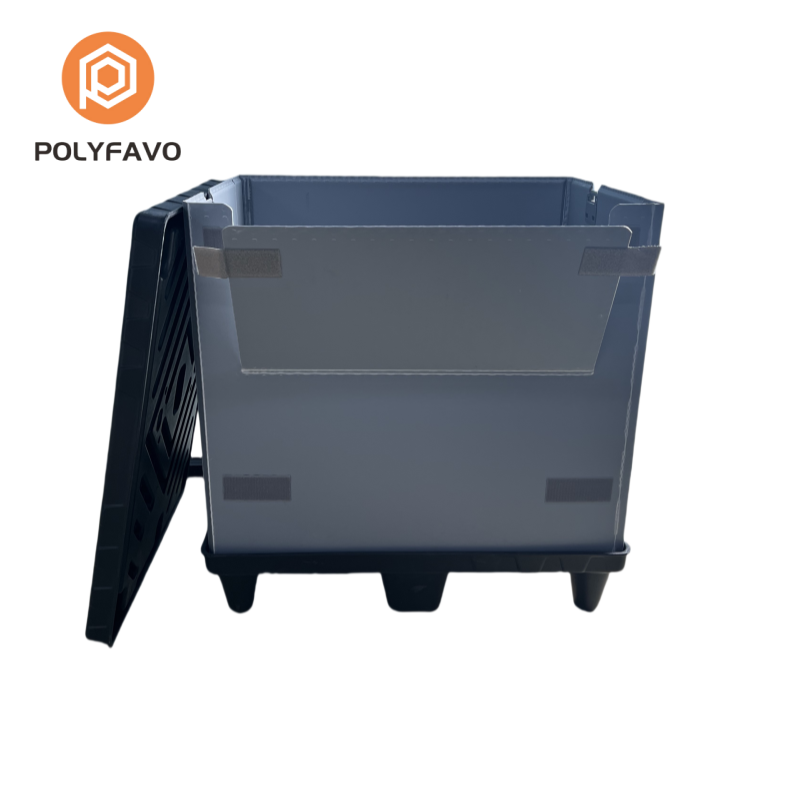
Foldable gaylord container designs have gained significant traction in industries where return logistics and storage space optimization are critical considerations. These containers can be collapsed when empty, reducing storage volume by up to 85 percent and dramatically improving transportation efficiency for return shipments. The folding mechanism typically involves scored fold lines and interlocking tabs that allow for quick assembly and disassembly without requiring additional tools or fasteners.
The reusable nature of quality foldable designs provides substantial cost savings over multiple use cycles, particularly in closed-loop supply chains where containers regularly return to their point of origin. Advanced hinge designs and reinforcement strategies ensure that folding operations do not compromise structural integrity, allowing these containers to maintain their load-bearing capacity through numerous assembly cycles.
Material Specifications and Performance Characteristics
Corrugated Construction and Durability Factors
The fundamental strength of any gaylord container derives from its corrugated construction, which utilizes multiple layers of kraft paper with internal fluting to create a lightweight yet remarkably strong structure. The flute design acts as a series of small columns, providing exceptional compression strength while maintaining flexibility to absorb impacts during handling and transportation. Different flute configurations, including single-face, single-wall, and double-wall options, offer varying performance characteristics suited to specific application requirements.
Edge crush strength represents one of the most critical performance metrics for gaylord containers, directly correlating to their stacking capability and overall durability. Modern manufacturing processes optimize fiber orientation and adhesive application to maximize edge crush values while maintaining cost-effectiveness. The relationship between container height, wall thickness, and edge crush strength determines the maximum safe stacking height and overall warehouse utilization efficiency.
Environmental Resistance and Barrier Properties
Moisture resistance capabilities vary significantly among different gaylord container specifications, with treatments ranging from basic wax coatings to advanced polymer barriers. Standard kraft paper construction provides adequate moisture resistance for typical warehouse environments, while specialized treatments enable use in high-humidity conditions or outdoor storage applications. The selection of appropriate moisture protection directly impacts product quality and container structural integrity throughout the supply chain.
Temperature resistance characteristics ensure that gaylord containers maintain their performance across typical storage and transportation temperature ranges. The cellular structure of corrugated construction provides inherent insulation properties, helping to moderate temperature fluctuations that could affect sensitive products. Specialized treatments can extend temperature tolerance for extreme conditions, though such applications typically require careful evaluation of cost-benefit considerations.
Industry-Specific Applications and Use Cases
Agricultural and Food Processing Applications
Agricultural industries extensively utilize gaylord containers for handling bulk commodities such as grains, seeds, and processed food ingredients. The large capacity and food-grade construction materials make these containers ideal for maintaining product quality during storage and transportation. Specialized food-grade treatments ensure compliance with regulatory requirements while providing the necessary barrier properties to prevent contamination and preserve freshness.
Harvest season operations particularly benefit from the efficiency of gaylord container systems, allowing for rapid field-to-processing facility transportation of crops. The containers' ability to interface with standard material handling equipment enables seamless integration into existing agricultural logistics networks. Many operations utilize specialized gaylord container configurations designed specifically for particular crops, optimizing capacity utilization while ensuring gentle handling of delicate products.
Manufacturing and Industrial Material Handling
Manufacturing environments leverage gaylord containers for work-in-process storage, component distribution, and waste material collection. The containers' durability allows them to withstand the rigorous handling typical in industrial settings while providing consistent performance throughout multiple use cycles. Their stackable design maximizes floor space utilization in production areas where space premium is a constant concern.
Automotive manufacturing represents one of the largest industrial applications for gaylord containers, with these systems handling everything from small components to bulky interior parts. The containers' ability to protect parts from damage during storage and transportation directly impacts manufacturing quality and efficiency. Specialized designs accommodate unique automotive components while maintaining compatibility with automated material handling systems common in modern manufacturing facilities.
Selection Criteria and Performance Optimization
Load Requirements and Safety Considerations
Proper gaylord container selection requires careful analysis of load characteristics, including total weight, product density, and distribution patterns. Understanding these factors ensures that the chosen container specifications provide adequate safety margins while optimizing cost-effectiveness. The relationship between container size and product characteristics directly impacts filling efficiency, storage density, and handling safety throughout the supply chain.
Safety considerations extend beyond simple weight limits to include factors such as center of gravity, load stability, and handling method compatibility. Products with unusual shapes or density distributions may require specialized container designs or additional stabilization measures. Proper training on safe handling procedures ensures that gaylord container advantages are realized while minimizing workplace safety risks.
Cost Analysis and Economic Benefits
The economic advantages of gaylord containers become apparent when comparing total cost of ownership against alternative packaging solutions. Initial container costs represent only a portion of the total economic impact, with factors such as labor efficiency, storage space utilization, and transportation optimization contributing significantly to overall value. The recyclable nature of corrugated construction provides additional environmental and economic benefits through material recovery programs.
Return on investment calculations must consider both direct cost savings and operational efficiency improvements enabled by gaylord container implementation. Reduced handling time, improved inventory management, and decreased product damage rates all contribute to measurable economic benefits. Many organizations find that systematic gaylord container adoption enables scalable logistics improvements that support business growth without proportional infrastructure investment.
Maintenance and Handling Best Practices
Proper Storage and Handling Techniques
Effective gaylord container management requires understanding proper storage conditions and handling procedures that maximize container lifespan and performance. Storage areas should maintain consistent temperature and humidity levels while providing adequate protection from moisture infiltration and mechanical damage. Proper stacking procedures ensure structural integrity while maximizing storage density and accessibility for inventory management operations.
Handling equipment selection directly impacts container durability and operational efficiency. Forklift operations require careful attention to fork placement and lifting speeds to prevent container damage during movement. Conveyor systems must be properly configured to support container dimensions and weight distributions without causing structural stress that could compromise integrity during transportation cycles.
Quality Control and Inspection Procedures
Regular inspection protocols identify potential container issues before they impact operations or product quality. Visual inspections should focus on corner integrity, wall condition, and bottom support adequacy, with damaged containers removed from service before failure occurs. Systematic quality control procedures ensure consistent performance while identifying trends that might indicate process improvements or specification adjustments.
Documentation of container performance data enables continuous improvement in selection criteria and handling procedures. Tracking metrics such as use cycles, failure modes, and performance variations provides valuable insights for optimizing gaylord container specifications and operational procedures. This data-driven approach supports informed decision-making regarding container procurement and logistics optimization strategies.
FAQ
What are the most common gaylord container dimensions available in the market
The most standard gaylord container size is 48 inches by 40 inches at the base with heights ranging from 30 to 48 inches, matching standard pallet dimensions for optimal logistics integration. Other common sizes include 36x24 inch containers for smaller applications and various custom dimensions to meet specific industry requirements.
How much weight can a typical gaylord container safely support
Standard single-wall gaylord containers typically support loads between 1,000 and 1,500 pounds, while double-wall constructions can handle weights exceeding 2,500 pounds when properly supported. The actual weight capacity depends on factors such as wall thickness, flute configuration, and the specific construction methods used in manufacturing.
Are gaylord containers suitable for food-grade applications
Yes, gaylord containers can be manufactured with food-grade materials and treatments that comply with regulatory requirements for direct food contact. These specialized containers include appropriate barrier properties and contamination prevention features essential for maintaining food safety throughout storage and transportation processes.
What is the difference between collapsible and standard gaylord containers
Collapsible gaylord containers feature specialized folding mechanisms that allow them to be collapsed when empty, reducing storage volume by up to 85 percent and improving return logistics efficiency. Standard containers maintain their shape throughout their lifecycle but may be more cost-effective for single-use applications or when return logistics are not a consideration.